
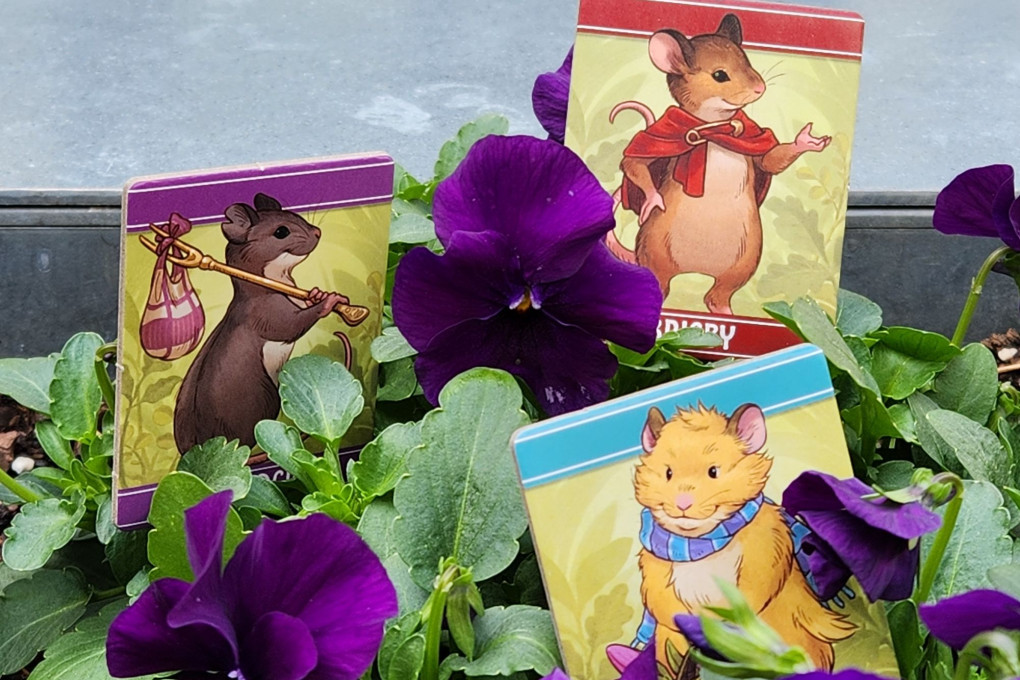
I’m of a generation that has fond memories of media involving tiny little rodents. Our family’s VHS copy of The Rescuers Down Under lived in the VCR most of the time. My brother and I took some deep dives into the Redwall series. We loved ourselves some Ratchet and Clank.
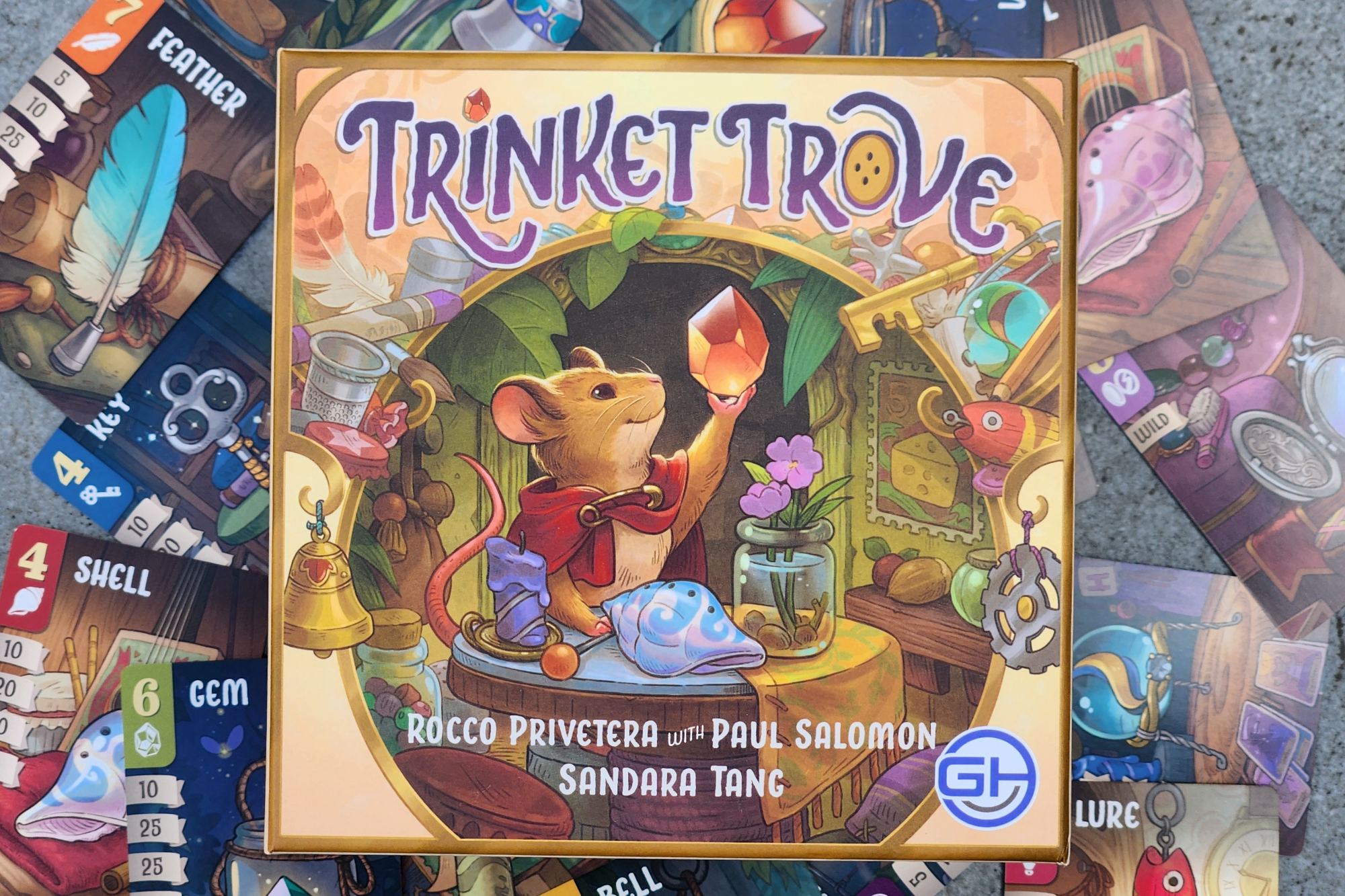
So a game like Trinket Trove is one that will immediately get my attention. The artwork is immediately adorable, featuring small critters collecting shiny little objects to decorate their burrows. It’s charming right away.
But that same presentation might make some gamers assume the game is overly simple. And truthfully, it is pretty simple.
One Rodents Trash…
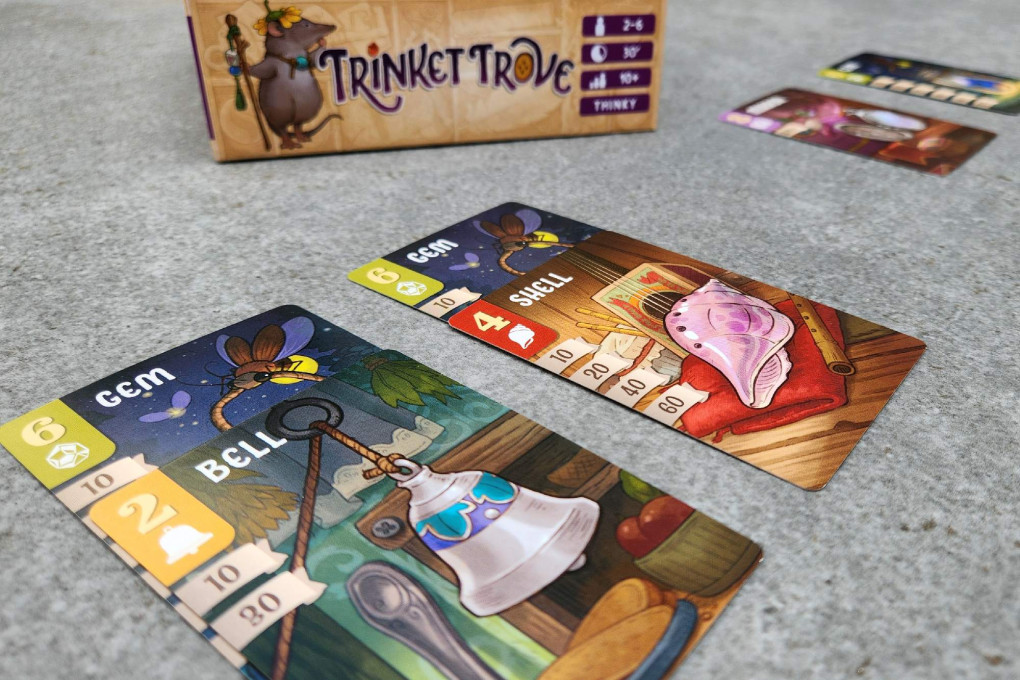
At its core, Trinket Trove is a game about bidding cards, gaining cards, and collecting sets. Each round, players decide how many cards from their hand they want to bid in order to determine their position in the upcoming round of card drafting. More cards means a more valuable bid, which means earlier picks.
But you’ve got to be careful, because your bids are also up for grabs for all the other players during the drafting phase. Those 5 cards that got you dibs on a few cards you have your eye on are going to end up in someone else’s hand.
That tradeoff is where most of the decision making comes from. You have to decide whether it’s worth sacrificing cards now in order to secure something valuable from the table, or if you should hold onto those cards and hope something good makes its way to you later. Going for a big bid can feel tempting, but it’s risky, especially if you’re one of the early bidders. Everyone else is going to have the chance to decide if they want to outbid you, so you might be pushed way further down the pecking order than you ever expected.
You can also choose to bid zero cards, which often feels like a clever move in the moment. In practice, it frequently leaves you choosing from cards that nobody else wanted. On the other hand, bidding zero can also mean you’ll end up being the last person to bid in the next round, giving you the chance to have total control of when you’ll pick.
Most of my plays were with five or six players, which felt like a good number for the game. Turns move fairly quickly as long as nobody spends too much time analyzing their options, and there usually wasn’t much downtime between decisions.
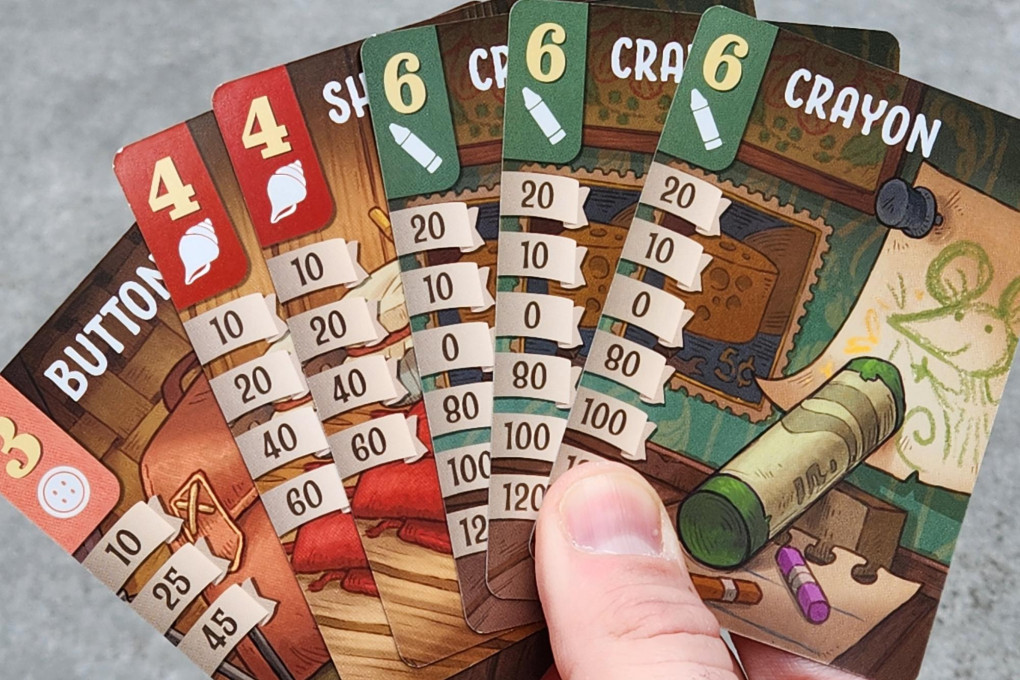
The game also leads to a few fun moments around the table. Occasionally someone would commit to a much larger bid than anyone expected, which usually led to a collection of oohs and aahs. There was also a fair amount of table talk as players dared someone to go for a big bid or tried to discourage them if they were hoping to grab a particular card themselves.
Final Thoughts
Trinket Trove isn’t really the centerpiece of a game night, but it works nicely as a lighter game after something more substantial. In one session we ended up playing it twice in a row simply because we enjoyed the experience. It also feels approachable for younger players. Kids around eight years old should be able to understand the tradeoffs involved without too much trouble, especially once they see how the bidding works.
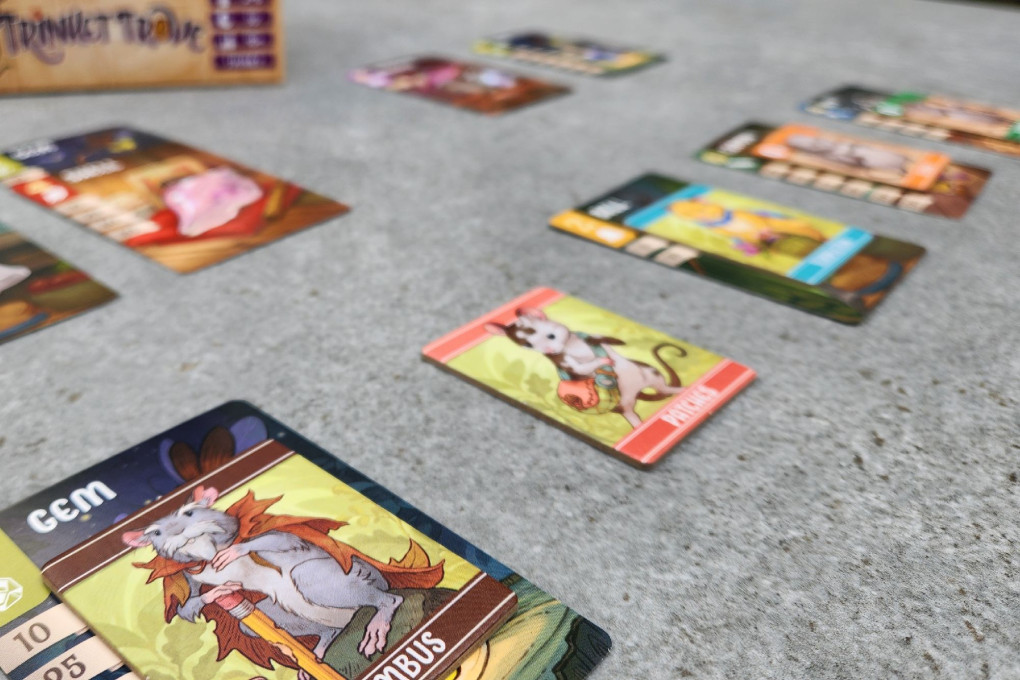
All told, Trinket Trove is a nice little game that’s worth considering if you could use another small box title in your collection. It’s got great visual appeal, it doesn’t outstay its welcome, and you’ll have some fun with it. Hopefully no one takes it too seriously, though. It’s probably a little too cute for that.
Trinket Trove is available from GameHead’s webstore or online through Amazon today.
This game was provided to us by the publisher for review. Read more about our review policies at One Board Family.
Highs
- Adorable artwork
- Simple to teach, simple to play
- A great game for multiple plays at a time
Lows
- Might be too simple for some
- Not seeing all the cards means there’s some luck involved
Complexity

Time Commitment
Replayability