
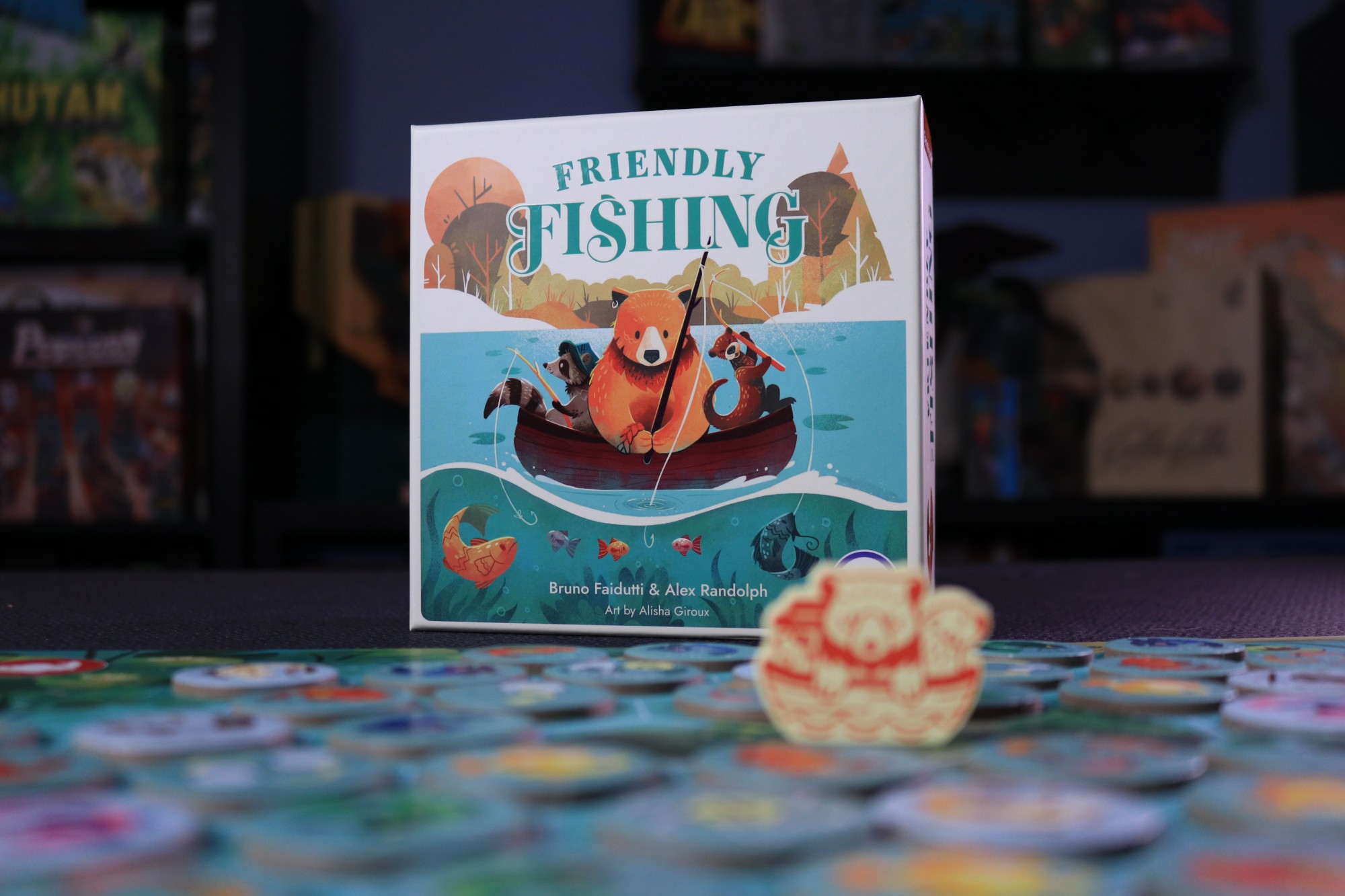

A day on the lake with friends may sound like a dream for many. Friendly Fishing is a casual fishing experience for two to five players. This set collecting game encourages players to engage in friendly competition as you move around the lake, catching a variety of fish. Let’s cast a line and see what we reel in with this new GameHead release.
Get in the Boat
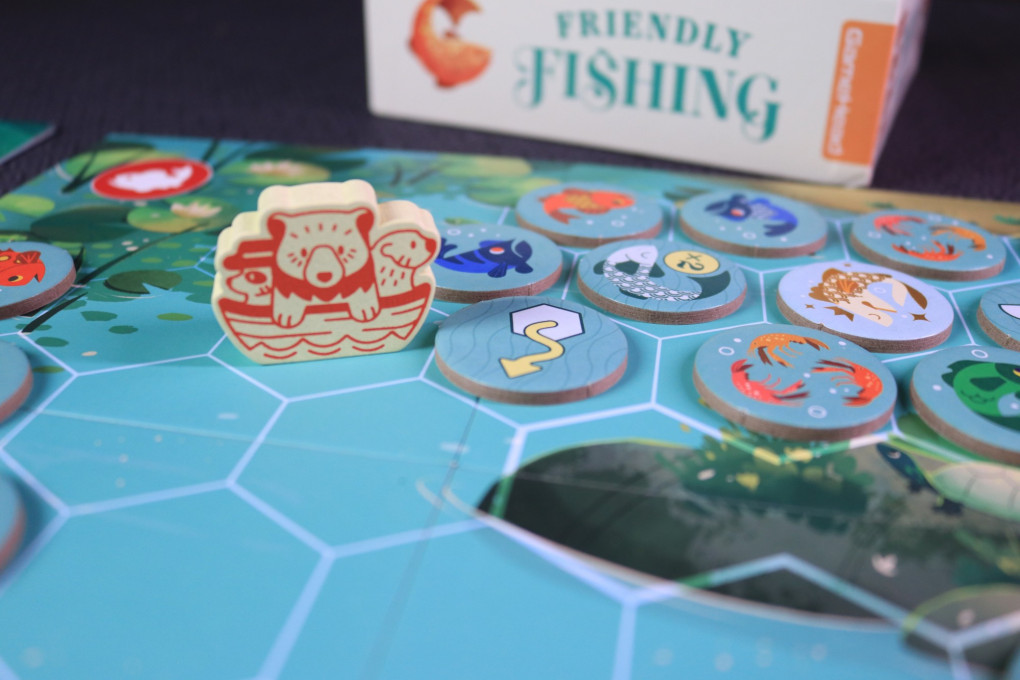
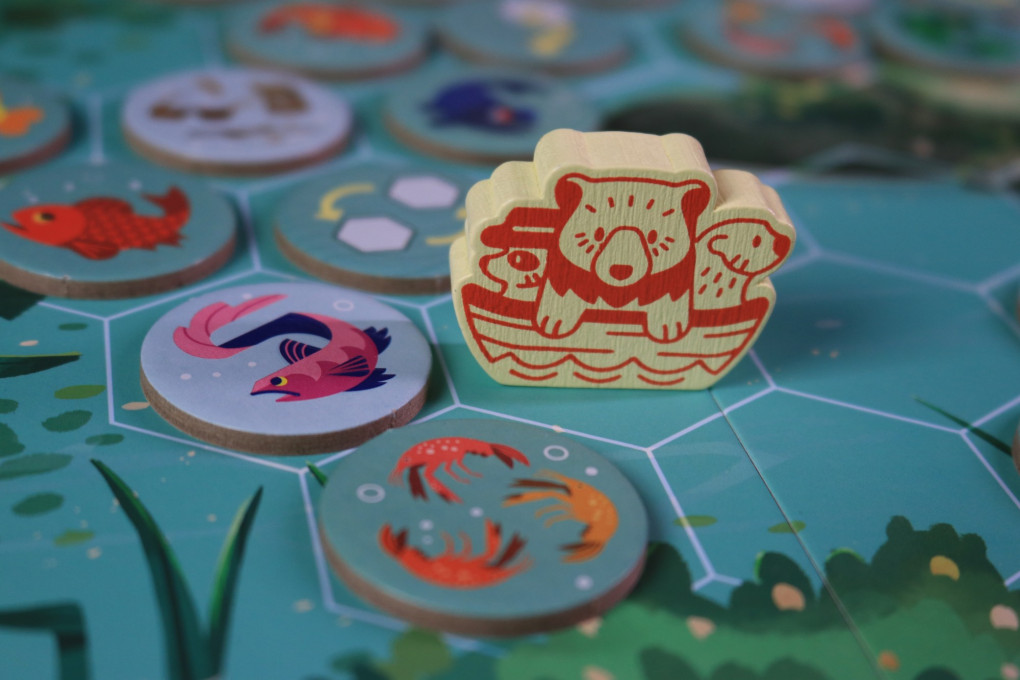
The premise is simple. In the center of the board is a wooden boat token with three incredibly cute animals ready for a day on the lake. On your turn, simply move that boat into an adjacent hexagon and take the fish that is in that space. That’s it! Mostly.
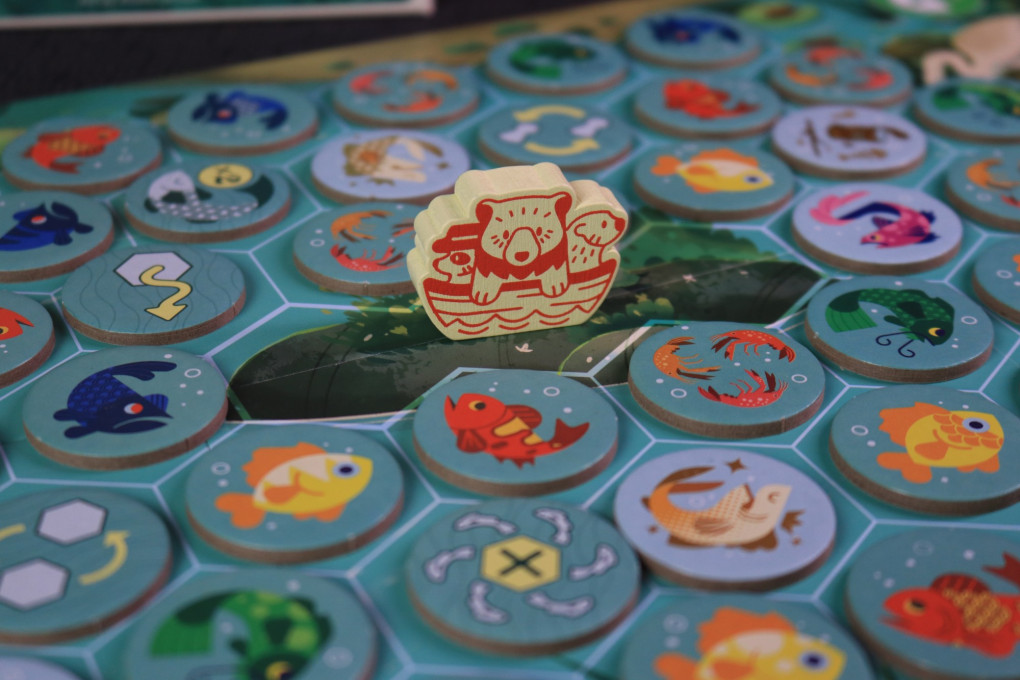
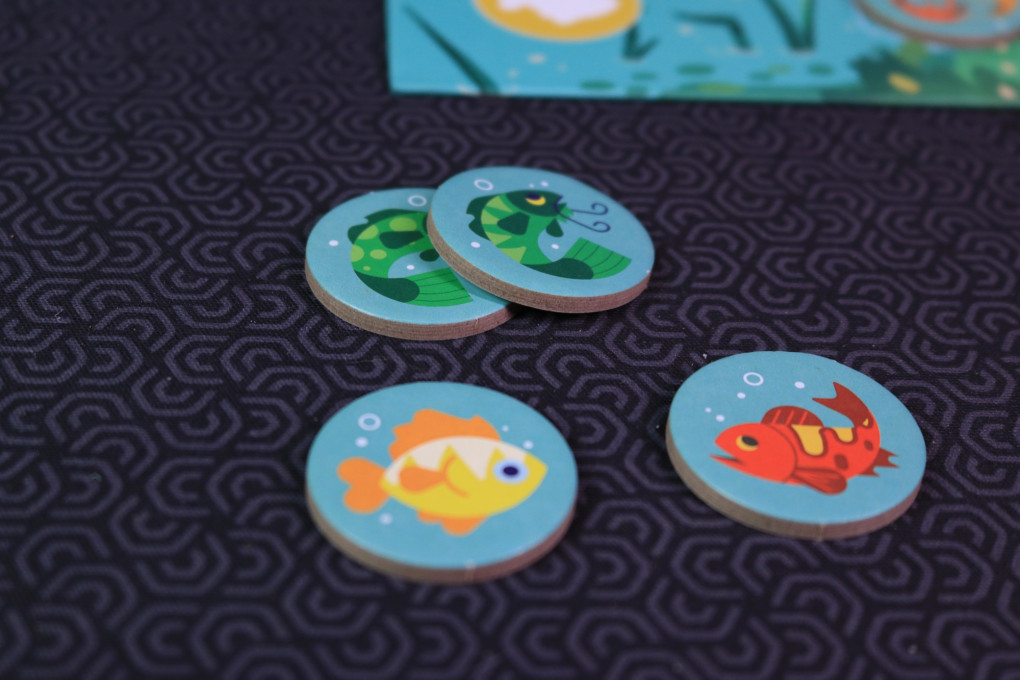
Players will try and collect sets of basic fish that will increase their final score. The more fish of a single type that you collect, the more points you’ll gain. The game also comes with six Special Fish tiles (three of each type). These all have unique scoring criteria and are easily recognized by their light blue background. The Kingfish will immediately cause a player to win the game if they can collect all three. Catching a Lunker will force any other player with a Lunker to throw it back in the box. Shiners will give you negative points if you catch only one, but is worth a lot if you collect all three.
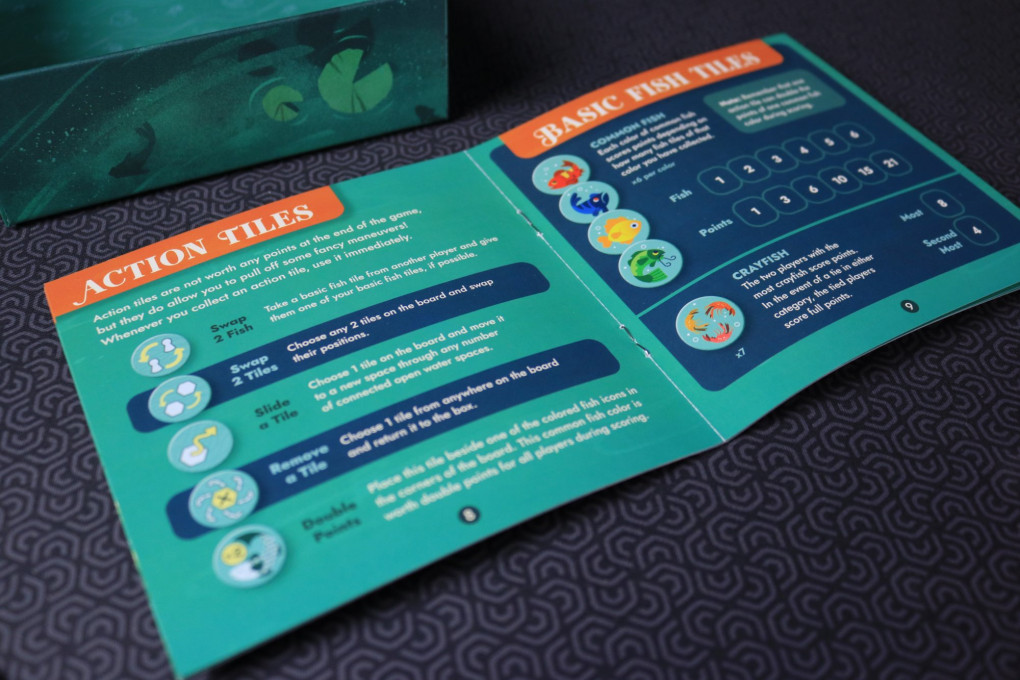
You’ll also run into Action tiles in Friendly Fishing. These tiles all do something different that can sometimes modify the state of the tiles in the lake. Swapping tiles, doubling the points of a basic fish, and even swapping an already caught fish are powerful actions.
Twisted Fishing
A day on the lake is made better with friends. Friendly Fishing is not only about catching the best fish, it’s also about setting up the player to your left as you play. Your final score will be a combined total of the fish you caught AND the points scored by your opponent to your left. Putting your neighbor in a poor position at the end of your turn can possibly tank your score. What happens after your turn is just as important as what you catch on your turn.
While many games pit you against the other players at the table, Friendly Fishing has you thinking strategically about how you can help your opponent. This little twist in the scoring makes this game truly unique.
The only struggle we’ve had with this game is the lack of player aids for the players around the table. The rulebook lays out all the Action and Special Fish tiles really nicely. Unfortunately, that’s the only place this exists. This leads to players passing around the rulebook for the majority of the game. It’s not really an issue once you’ve played the game half a dozen times. But, that’s not reality in our home. We’re always introducing these games to new people. A double-sided player aid would have helped a lot here.
Friendly Fishing has some great replayability with a variety of Special Fish tokens and two board sizes to play on. A day on the lake with friends should be fun and chill. This is exactly the experience that Friendly Fishing serves up to players. Younger gamers will easily catch on while seasoned gamers will have fun striking a balance of gaining points and setting up their neighbor for a big score.
Final Thoughts
Friendly Fishing pulled me in with its ultra-cute style. This is an excellent set collection experience for anyone looking for a casual game that will connect with a wide audience. Since your final score is directly tied to the neighbor on your left, you’re turn has to work in support of your opponent. This is a fun twist in a game that is not an actual co-op experience. Friendly Fishing is an easy game to recommend for your family game shelf.
Friendly Fishing releases in September 2026. Visit the GameHead webstore to order your copy today.
This game was provided to us by the publisher for review. Read more about our review policies at One Board Family.
Highs
- Setting up your neighbor for a good catch can be rewarding
- Six different Special Fish tiles add to replayability
- Fun and casual set collecting game
Lows
- Players who are hyper-competitive may struggle with sharing points
- A small player aid would have helped new players
Complexity

Time Commitment
Replayability


A strong gameplay loop matters more to me than flashy visuals. If the mechanics feel good, I can keep coming back for a long time.