

A one vs many deck building game from MinaLima, an award winning graphic design studio had us intrigued. While I’m not super familiar with the source material, the pure artistic style of Defenders of Hogwarts really attracted me to this game. Players take on the role of the four houses while another player uses the dark arts to undermine the work of the other players. Let’s see if this new game brings magic to our game table.
Battle of Good and Evil
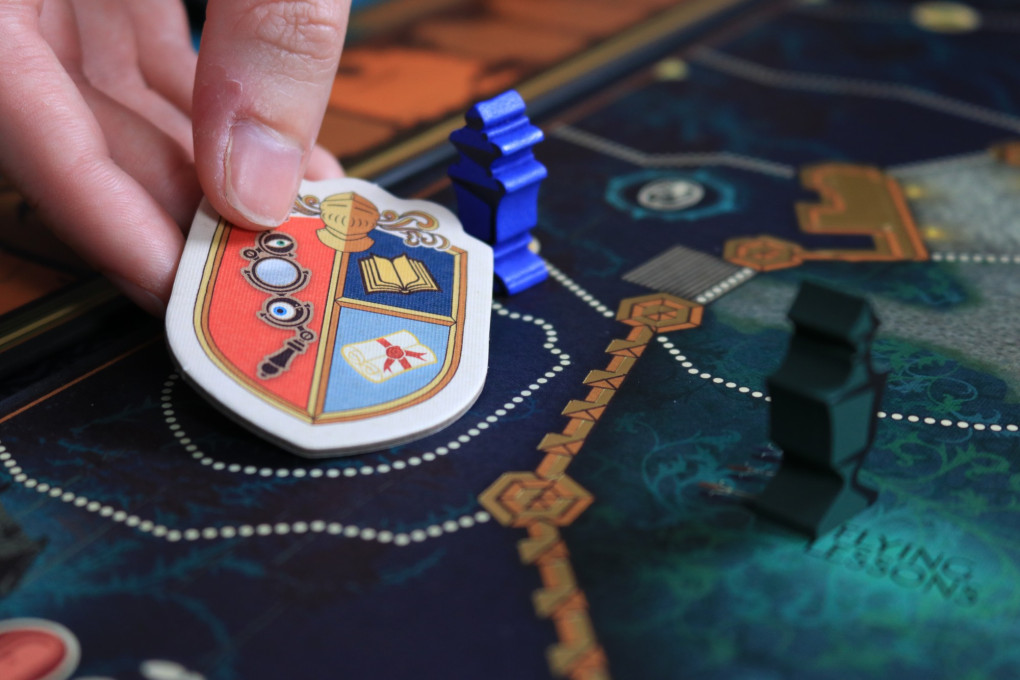
If you are playing the role of a student, you’ll choose from the Gryffindor, Hufflepuff, Slytherin, or Ravenclaw houses. All players who choose one of these houses will receive a set of identical starter cards during setup. Across the sprawling game board are Defense Shields that are tucked away, waiting to be claimed. There are two shield types that require specific items before they can be claimed. As a student of Hogwarts, you are tasked with claiming two of these shields in order to win the game.
One player at the table will control the dark forces in the game. This player has a unique set of start cards and a completely different objective in the game. Ultimately, they will use their turns to interfere with the progress of the House players and lean into the dark arts track in order to win. Asymmetric win conditions and unique cards between the good and evil players makes both sides feel different.
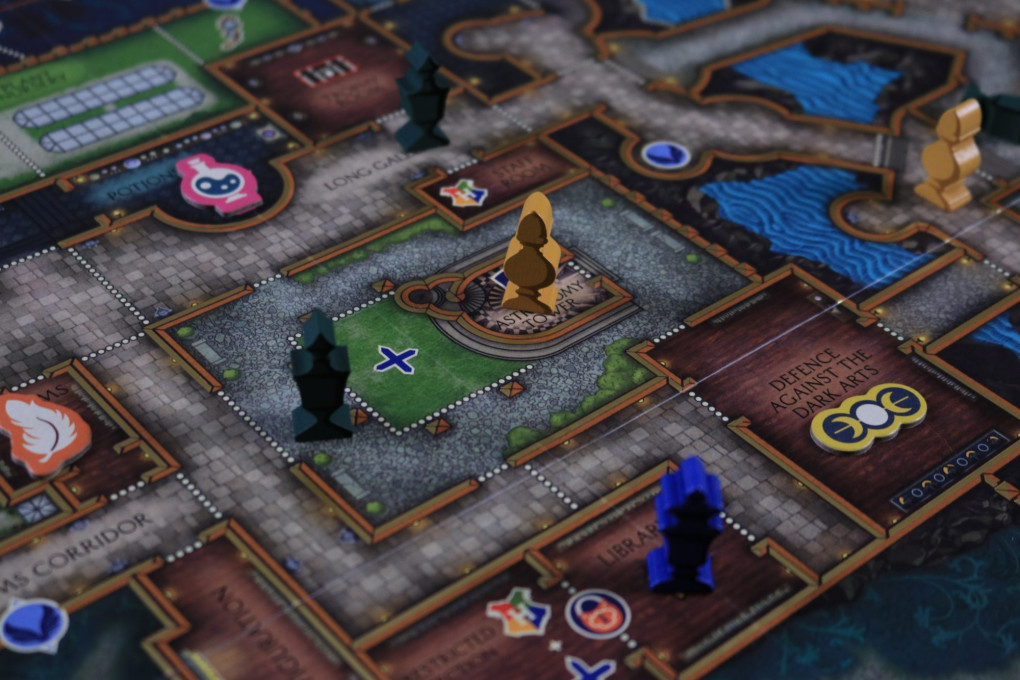
Defenders of Hogwarts plays out on a beautifully detailed map of the school and surrounding areas. House players have to deal with locked rooms, spaces that are sealed with magic and winding corridors as they move through the building. The central board has amazing gold leaf accents that makes everything on the table feel elevated.
Houses United
Each round, the House players will get the opportunity to go first. Players will use the five available cards in their hand to move their house tokens around the school. Some cards will give players the chance to pass through locked doors, barriers, or spaces that are blocked by magic. Your starting cards are pretty average, but recruiting new spell cards from the side board is where the magic is at.
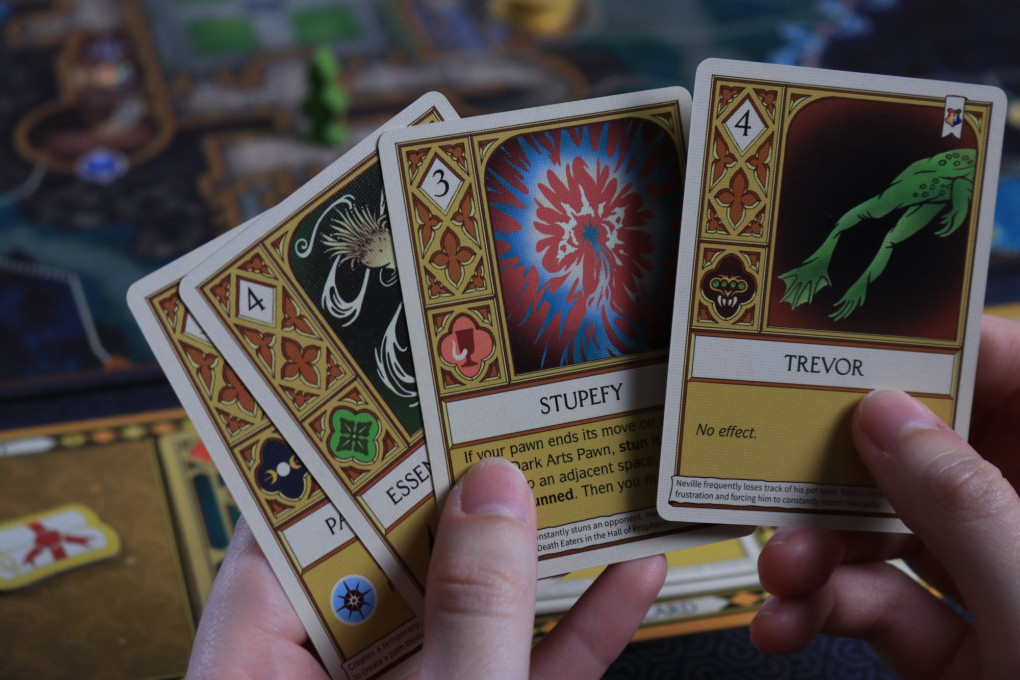
Players can discard one card to draft a new spell card to the top of their draw pile. Discarding two cards give you the chance to get a spell card from the advanced space, moving your house along the Loyalty track. As you build your deck, you want a good variety of special actions that will let you move effortlessly around the map. Cards that have two movement numbers mean that you can move two different house tokens or combine the numbers to move a single token on your turn.
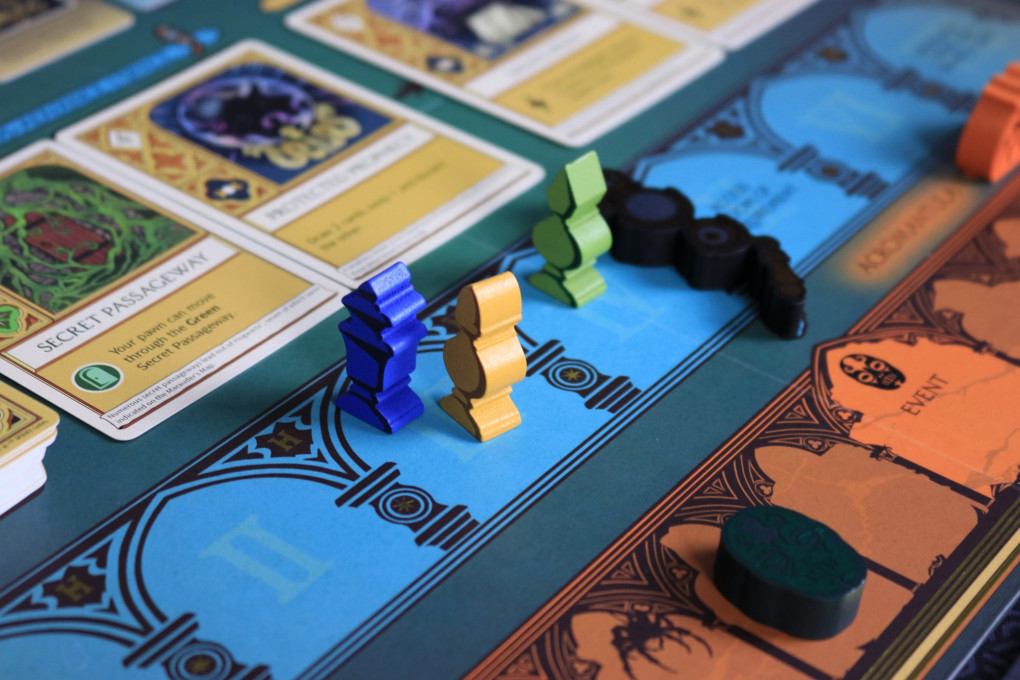
Players who are familiar with the deckbuilding mechanic will feel at home with the card play in Defenders of Hogwarts. When you begin running out of cards in your hand, it’s time to replenish and refill from your deck. You can discard or keep as many cards as you want in your hand, then draw back up to five, ending your turn. This replenish action is helpful for both yourself and the Dark Arts player.
The Dark Path
Each time the house players choose to replenish, the Dark Arts player moves their token up the Dark Arts track on the sideboard. This is just one of the ways to move along, gaining devious event cards, unlocking monsters, and ultimately taking control of Hogwarts. The more often House players replenish, the stronger the enemy gets.
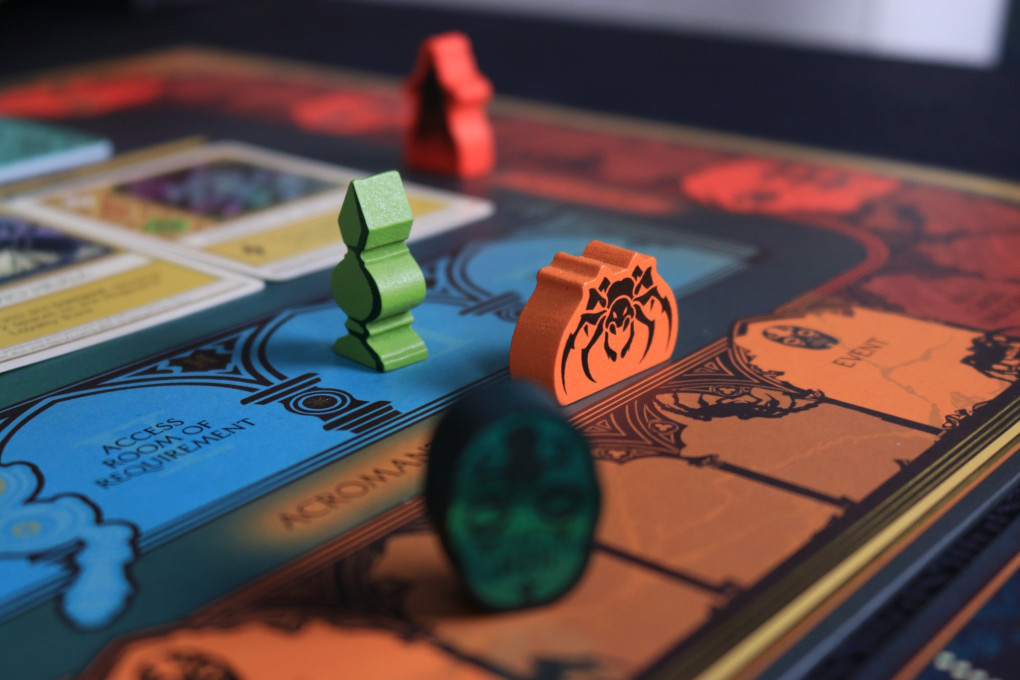
Movement for the Dark Arts player is tied to cards that are played, but this player is not restricted in the same ways that House players are. This player can move through locked doors, barriers on the map, water spaces, and sections that are protected by magic. Eventually, the tokens of good and evil will meet on the central board. When a House player ends on the space of a Dark Arts token, both tokens are stunned (laid down) and the house player moves the Dark Arts player to an adjacent space. Stunned tokens are only revived when that player takes the replenish action.
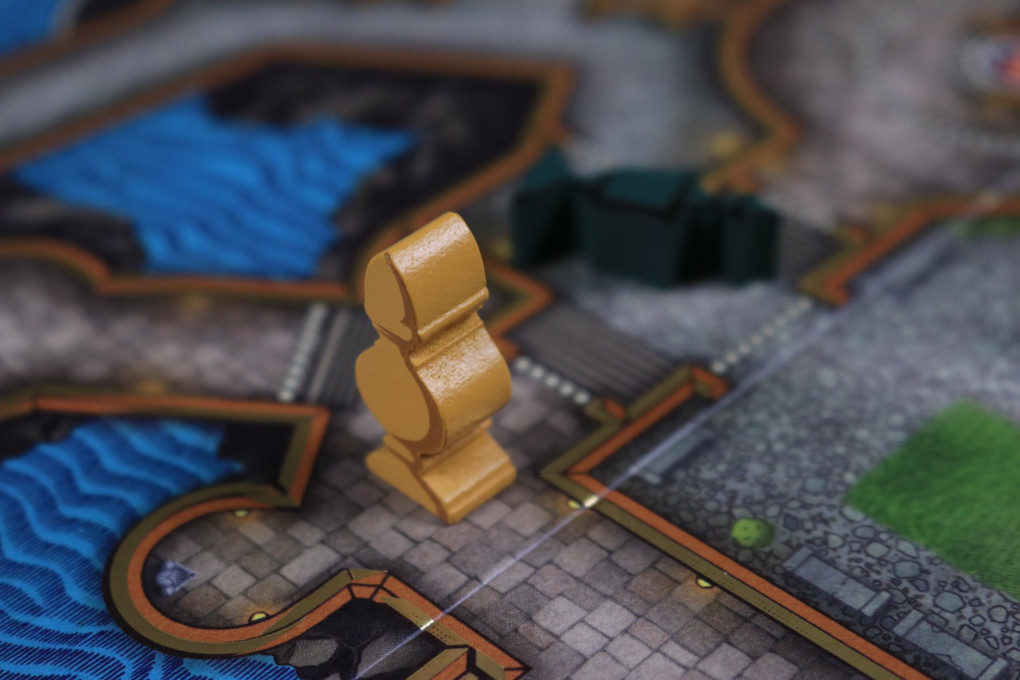
The Dark Arts player is trying to advance along their own track, eventually moving a specific number of their tokens into a specified room at the end of the game. This would mean the Dark Arts player has taken control of Hogwarts.
Learning the Art of Magic
There are a couple more mechanics at play here such as using tokens to play additional cards on your turn, hiding in protected areas, and moving through secret passages. The variety of cards in Defenders of Hogwarts feels really good. Illustration on the cards are top-notch and the structure of the game board makes it feel like a game of cat and mouse.
Like some of our favorite deck building games, players have to plan their way to victory. If you ignore icons that allow you to move through obstacles on the board, you’ll be sitting behind locked doors and protective spells most of the game. House players will need to talk through their strategy to collect Defense Shields since one of the items needed for a shield is a single resource. The Dark Detector is required for some of the shields and the Loyalty track will dictate who holds it during different points in the game.
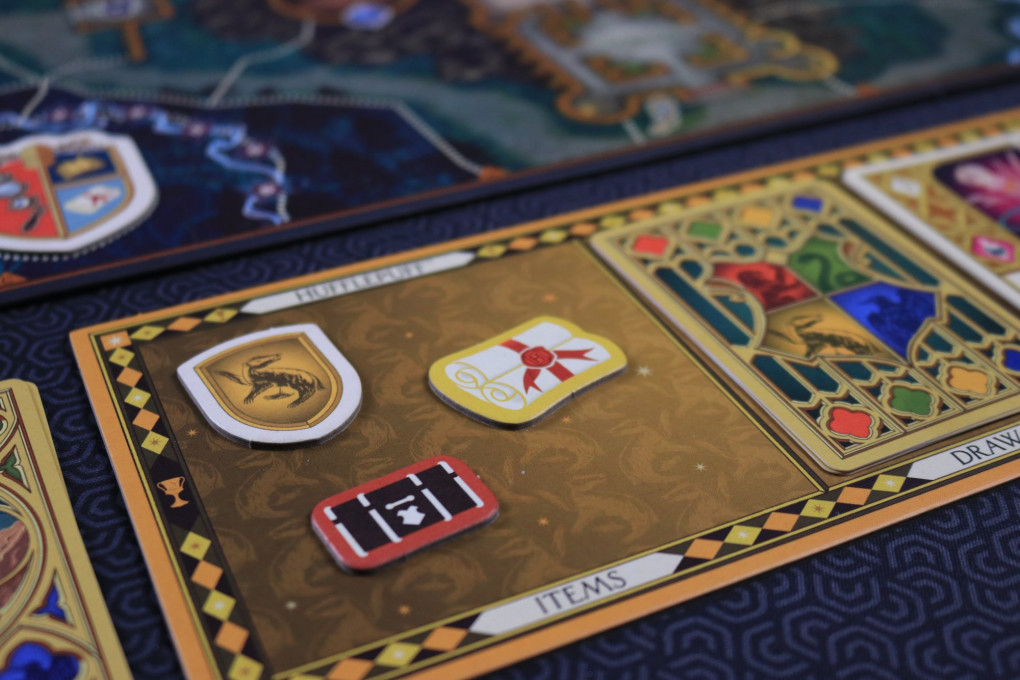
Defenders of Hogwarts has a straight-forward set of rules that we could easily jump into. One thing that became apparent after a couple plays is that the game difficulty is really set by the Dark Arts player. Since the game plays up to five players, it’s possible that four House players can go against the Dark Arts player. Four players that communicate well can really frustrate the enemy by spreading out around the map and focusing on getting the resources they need. The game felt really well balanced at three players as both sides fought to accomplish their end game tasks.
Final Thoughts
Defenders of Hogwarts is an interesting design. There is nothing inherently wrong with the gameplay, but there are some questionable decisions that pop up throughout the game. The Dark Arts player has a couple cards that allow a players turn to be skipped. This makes sense to balance the game at five players but feels like an outdated and punishing mechanic in a three player game.
In the early game, turns are very limiting as you casually make your way out into the corridors of the school. Those first few rounds are very boring. The game only opens up once you gather Hogwarts tokens and draft better cards. As a House player, you’ll get used to having your tokens sent back to the Great Hall when they get “bumped”. In the early rounds, this is really frustrating. Once you get a solid variety of cards flowing through your deck, this becomes less of an issue.
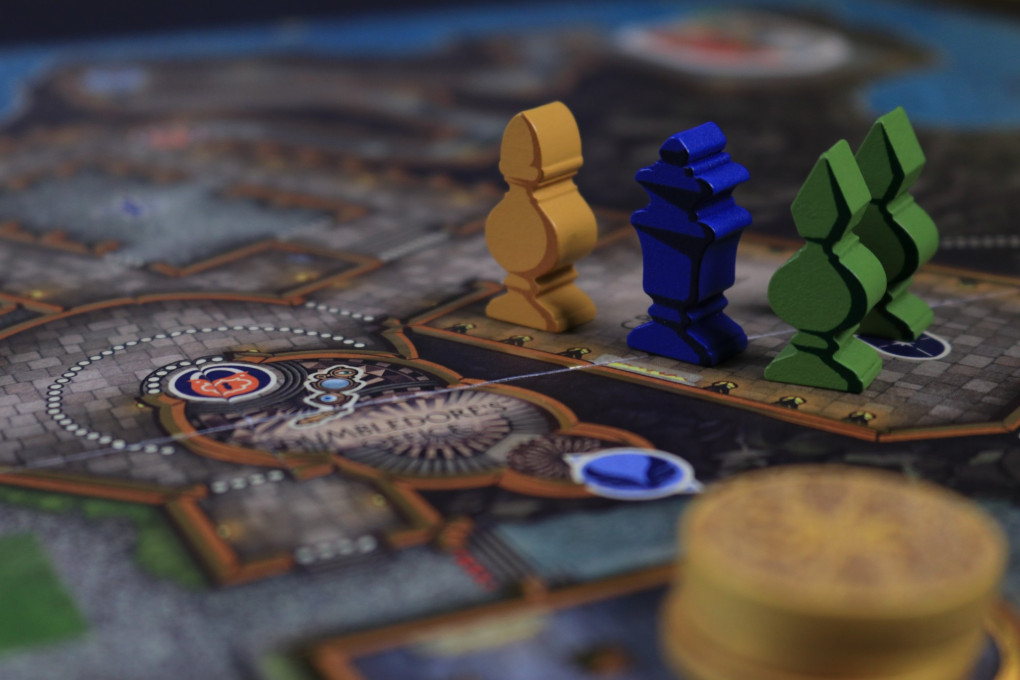
Some design decisions are simple and work really well here. When a new card is drafted, it goes to the top of your draw pile instead of your discard pile. The Dark Arts player cards have actions which are tied to their location on the Dark Arts track. This lets the difficulty ramp for the House players as the game advances.
Is Defenders of Hogwarts a good deck building game? Absolutely. Is it a great deck building game? This response will depend on how much you love the source material. Newer gamers who enjoy Harry Potter will really enjoy this game. The game may not be a great fit for more seasoned gamers who are just looking for a really well crafted deck builder.
For us, we’ve enjoyed the flow of Defenders of Hogwarts and look forward to sharing it with our friends who enjoy this universe.
Defenders of Hogwarts is now available for Late Pledge through MinaLima.
This game was provided to us by the publisher for review. Read more about our review policies at One Board Family.
Highs
- Art and visual style of the game is incredible
- Card play in the late game is fun
- Finding synergies to play multiple cards is really satisfying
Lows
- Being “bumped” back to the Great Hall gets very repetitive
- Difficulty will rely heavily on the gameplay of the Dark Arts player
Complexity

Time Commitment

Replayability