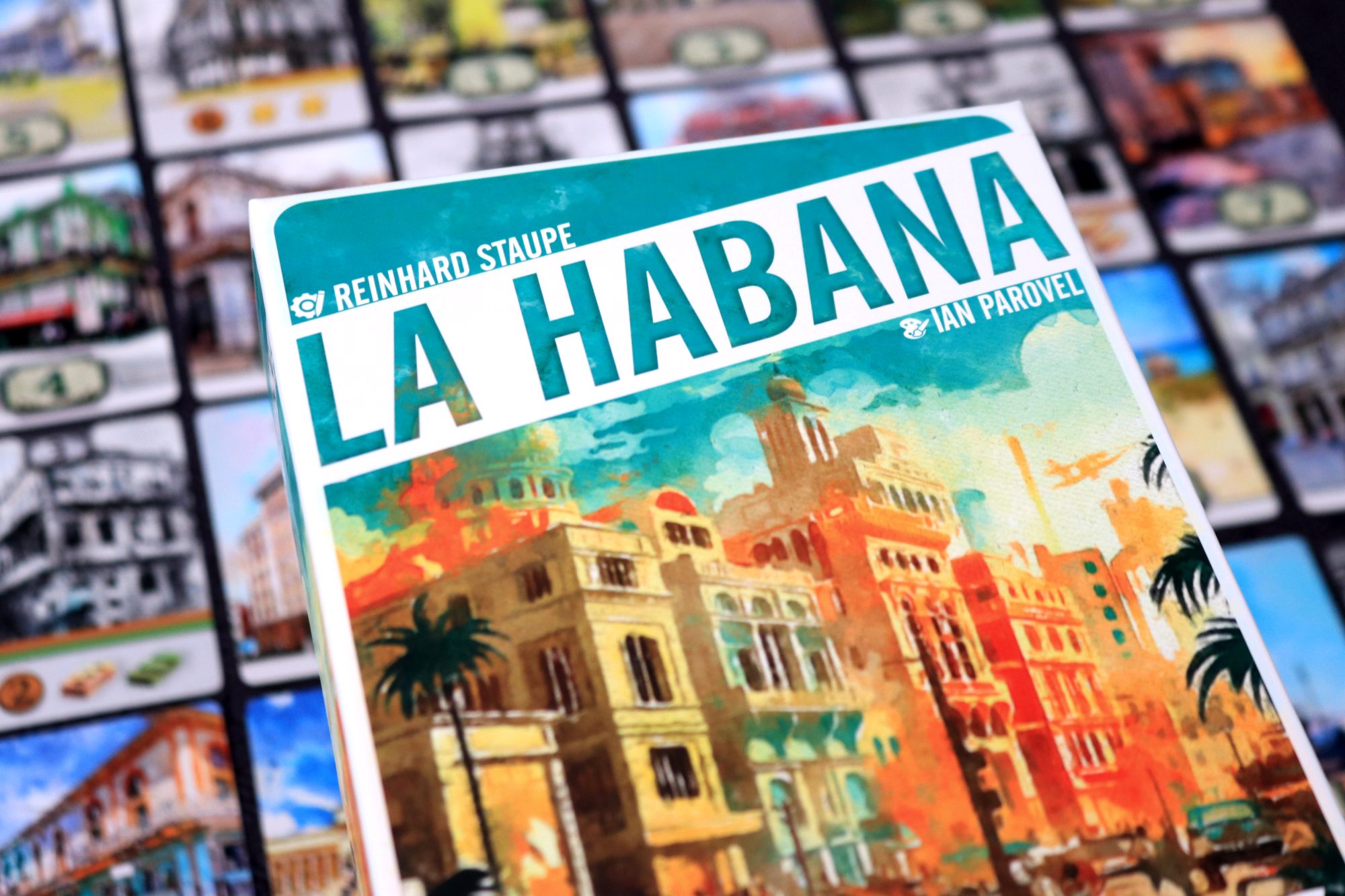

You and up to three other players are working to rebuild Havana, the capital city of Cuba. This hand management game is going to be cutthroat and resources can be scarce. Only one of you can be the greatest builder in Cuba. La Habana is a new edition of a fifteen year old game called Havana designed by Reinhard Staupe, now with artwork from Ian Parovel.
“Key to the New World”
La Habana uses a mix of bidding along side hand and resource management as you rebuild Havana. Players all have the same hand of thirteen cards during the game. Each round begins with an initiative phase where players combine two cards from their hand to create a unique number. Each card has an action or actions attached to them, giving players a tough decision when deciding their initiative cards.
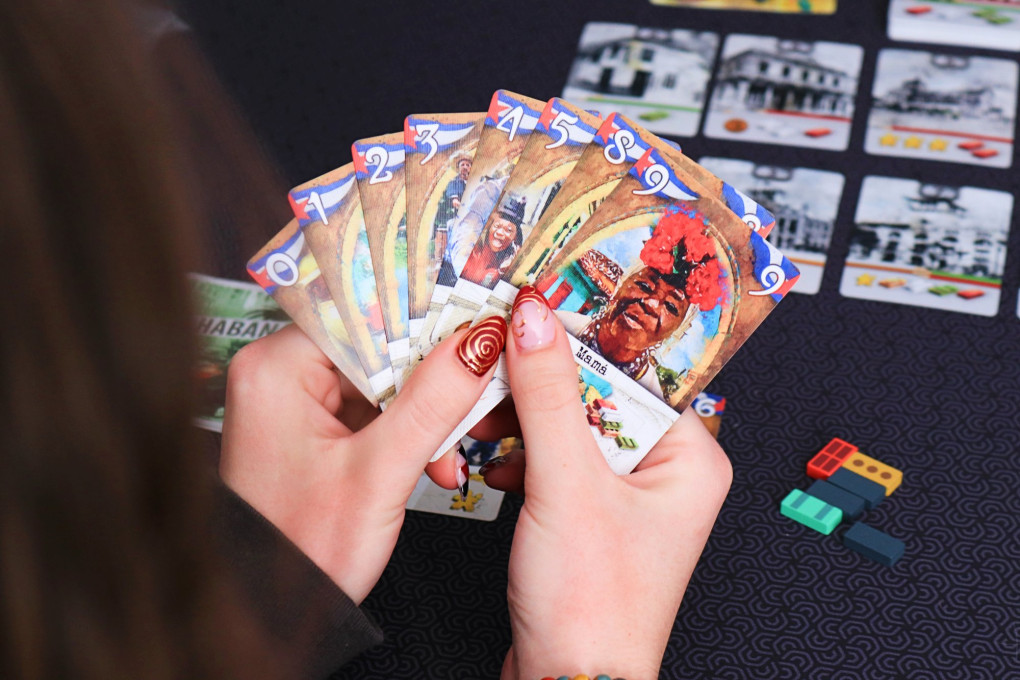
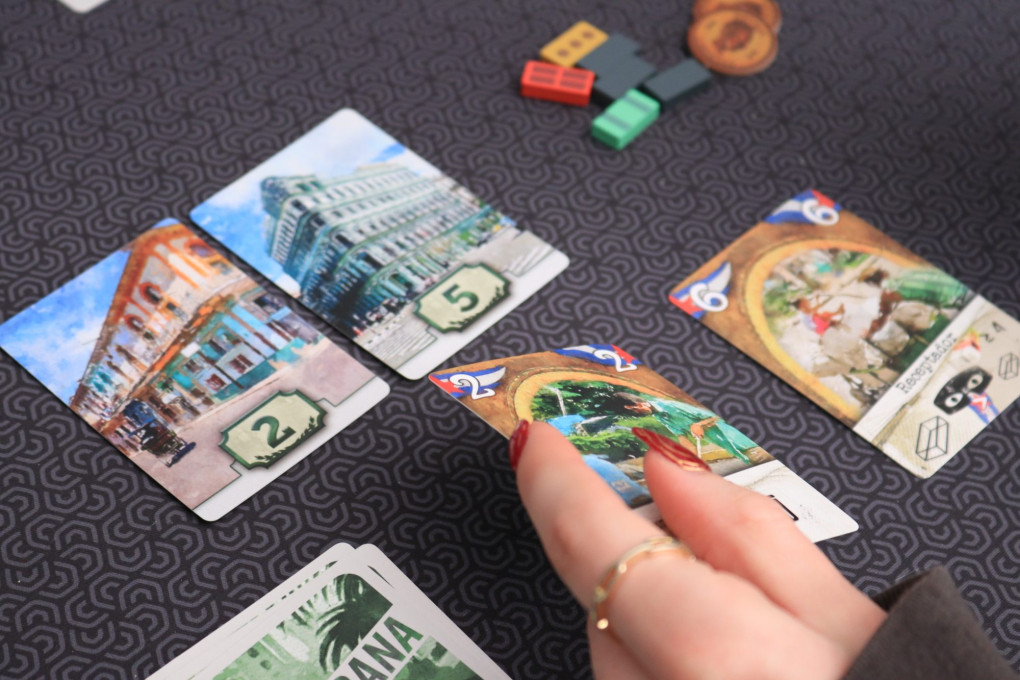
The low number will always lead, so picking the cards “2” and “8” means that your initiative number is “28”. Players then take turns from the lowest initiative number up to the highest. This phase slightly changes in round two and beyond as you keep one of the previously played cards, discarding one, and choosing a new one to make another two digit number.
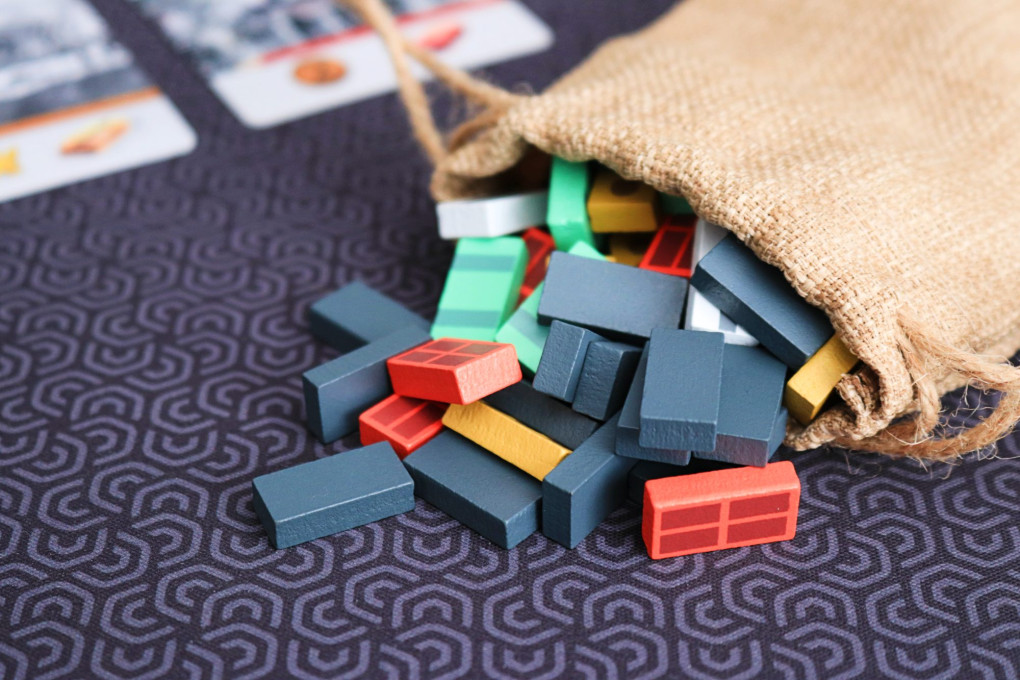
Players will take the actions on both initiative cards on their turn before deciding to turn in the resources to build a building. Players can only build from either end of the two rows of cards in the center of the table. You’ll find yourself ready to construct a building that is in the center of a row with no way to access it until the buildings in front of it are constructed. Each round ends with a refill of the resources on the Central Supply card. No matter how many resources are here, you’ll always add three new pesos and three new bricks from the bag.
Rebuilding and Resourcing
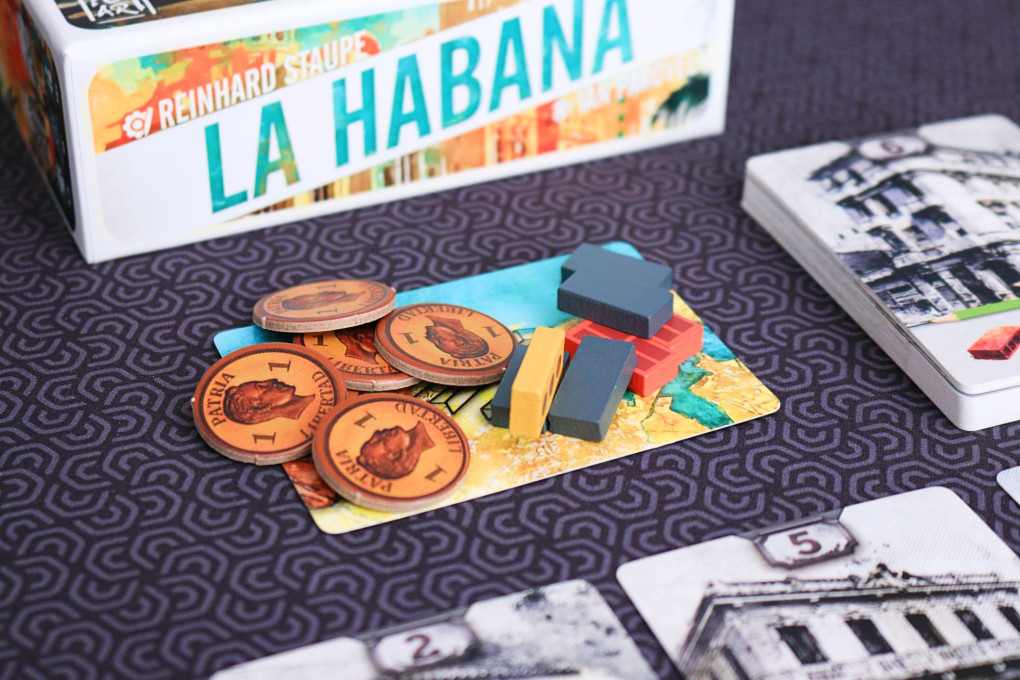
Each card has a unique action and there’s a balance between the action and the number on the cards. In La Habana, you’re managing your pesos, construction workers, bricks, and your dwindling hand of cards. One card gives you access to an architect symbol which is necessary for some buildings. Other cards give you resources or allow you to steal money or bricks from another player. When you really miss a card that you’ve already used, you can swap a card out to pull it from your discard using a card action on one of the number “2” cards.
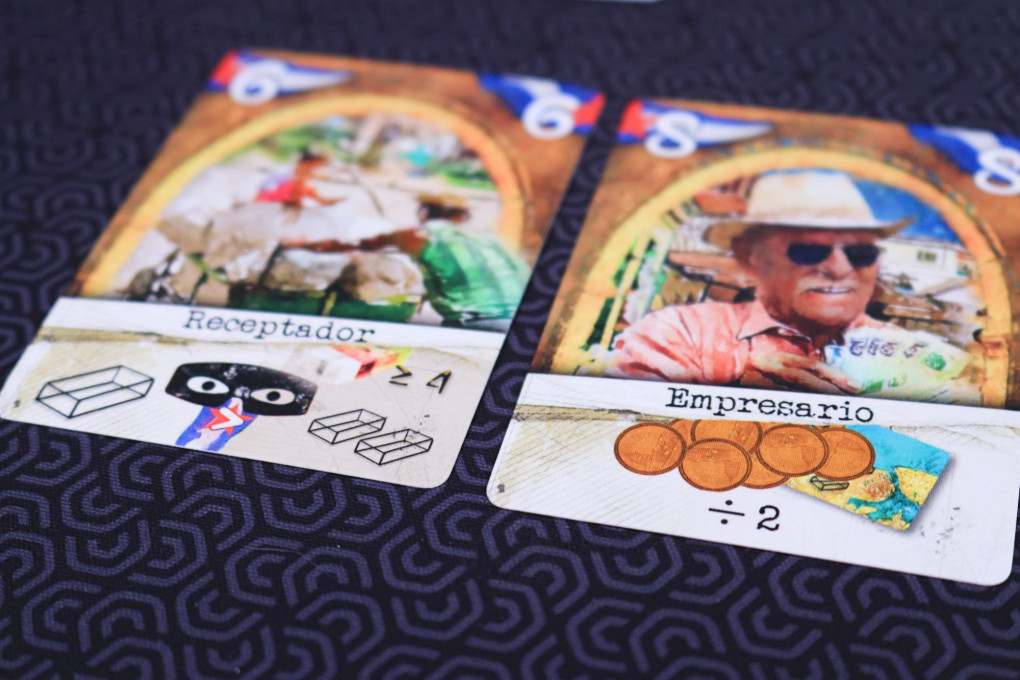
When a player is down to three cards, they will draw their discard pile back into their hand. Much of La Habana is knowing when to use your cards and reading your opponents. A couple cards give you a bonus if you are the first to use that specific card during a round. Getting stuck behind another player because of a high initiative that round can really mess you up.
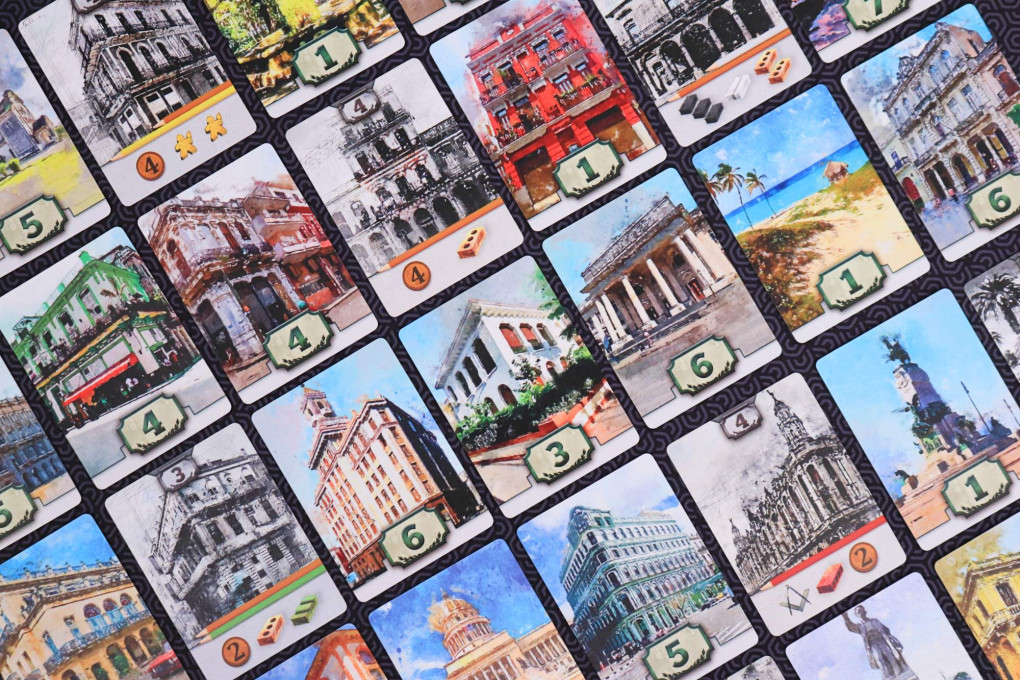
Each building has a point value at the top along with the cost along the bottom of the card. I’ve tried the strategy of just going for big expensive cards with high point values, and I’ve also tried to grab every cheap building possible. Both are solid strategies, but saving up for the higher value cards can feel like an eternity. There’s a real pressure in La Habana when you’re saving up resources, worried about being stolen from each round.
Cutthroat Construction
La Habana is one of those games that has just the right amount of player interaction. Some players may have an issue that all the interactions are mean or underhanded. The game balances it well with the cavate of players only being able to steal from someone that plays after them in the initiative order. Meaning, if you don’t want to get stolen from, you’ll need to go first.
The rhythm of this game is something that took Erin and I a couple games to really grasp. At two-players, La Habana is fine. You’re really only worried about the initiative of one other player and you’re either first or second in the round. At three and four players, there is so much more to consider. Who at the table really needs to go first? Who’s doing poorly enough that they would want to steal from you? Do you have a low enough initiative to steal from another player?
This game is cutthroat in the right ways. It is possible for players to feel like they are getting bullied or the game is getting away from them. Being able to pivot and change your strategy in the card play is vital to doing well in La Habana.
Final Thoughts
I know La Habana won’t be a hit for everyone. The game is just a slight bit mean and that works for Erin and I. While I never played the original Havana, this game feels fresh while still using tried and true game mechanics. The watercolor art style and bright colors really stand out. The resources are just limited enough to cause tension in the game and force players into using cards that would steal from others.
Players who don’t mind a little underhanded dealings in their card games may really enjoy La Habana. This is a game that I probably wouldn’t have gravitated toward on my own, but I’m really glad that it’s in our collection. If you think you’re up to the task of rebuilding the city of Havana, you can pick up a copy of La Habana today.
La Habana is available at your local game store, through the 25th Century Games webstore, or online through Amazon today.
This game was provided to us by the publisher for review. Read more about our review policies at One Board Family.
Highs
- Beautiful and colorful artwork from Ian Parovel
- Initiative phase of each round is so competitive
- Player interaction can be cutthroat and fierce
Lows
- Some players may feel player interactions are too mean
- Two player games feel a little dull
Complexity

Time Commitment

Replayability