
Sometimes, board game themes have their moment. That span of a year or so when you can’t walk into a game store without seeing a dozen new titles all hitting on the same idea. Right now, I think we’re firmly in a gardening-and-flowers moment.
I didn’t mind some of the earlier entries, but lately they’ve started to blur together. Collect lots of flowers. Make the right garden arrangement. All wrapped in that artsy-fartsy style and that font—the one you see painted on wooden signs at craft fairs, welcoming you home or saying something sassy about wine.
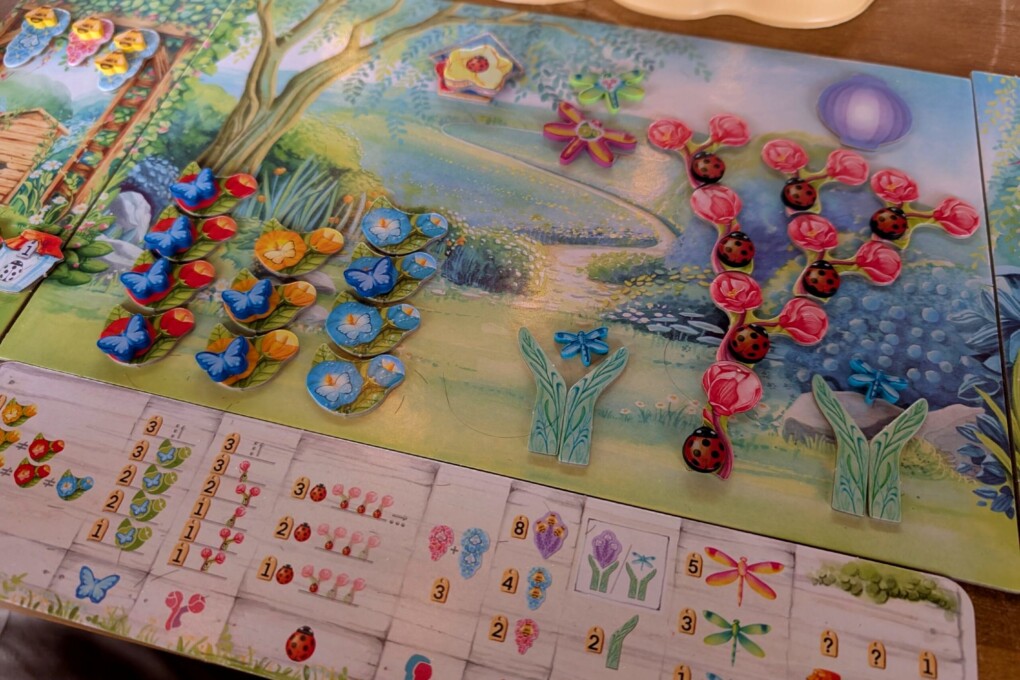
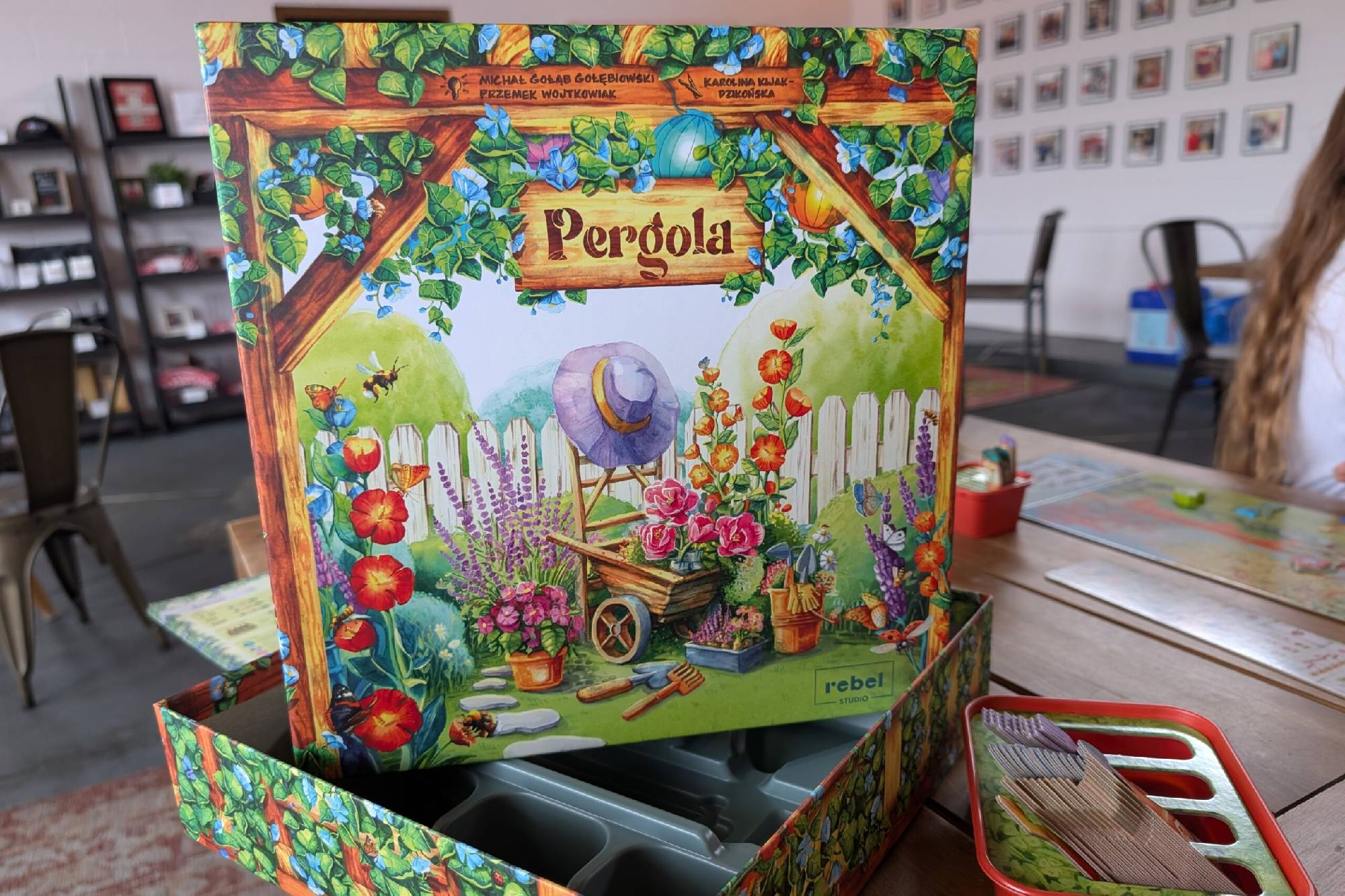
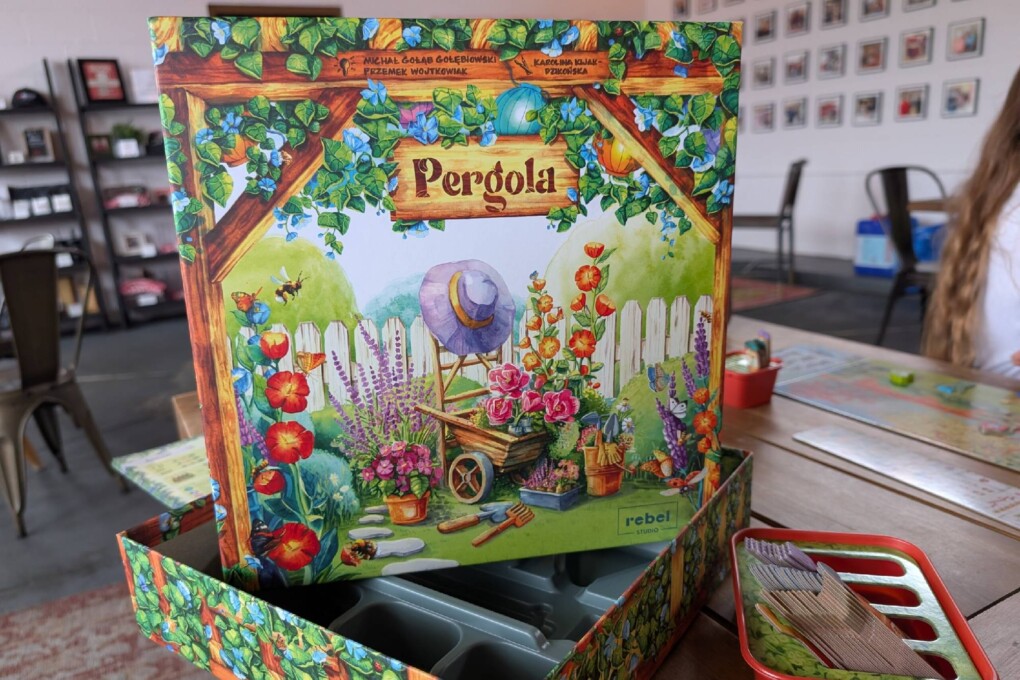
And yet… for some reason, Pergola caught my attention. Okay, I’ll be honest: it was the pretty little pieces. Yes, I just complained about how commonplace that has become, but this felt different. The art style is distinct, standing apart from the watercolor or botany-textbook look. There are so many tiny components, and they all look fantastic together. And third… did I mention all the adorable tiny pieces?
But components alone don’t make a good game. So as I spent close to an hour reorganizing my chaotic copy (more on that later) and finally set Pergola on the table for the first time—with two adults and a surprisingly capable ten-year-old—I couldn’t help but wonder: was all of this going to be worth it?
Chillin’ Among the Flowers
At its core, Pergola is a fairly laid-back game about setting up a beautiful garden area. (Yes, your garden has a pergola, but it’s not really the main feature. Still, I guess “Garden” isn’t as distinctive of a name.) You’ll choose tools to help you grow plants and encourage insects to score points.
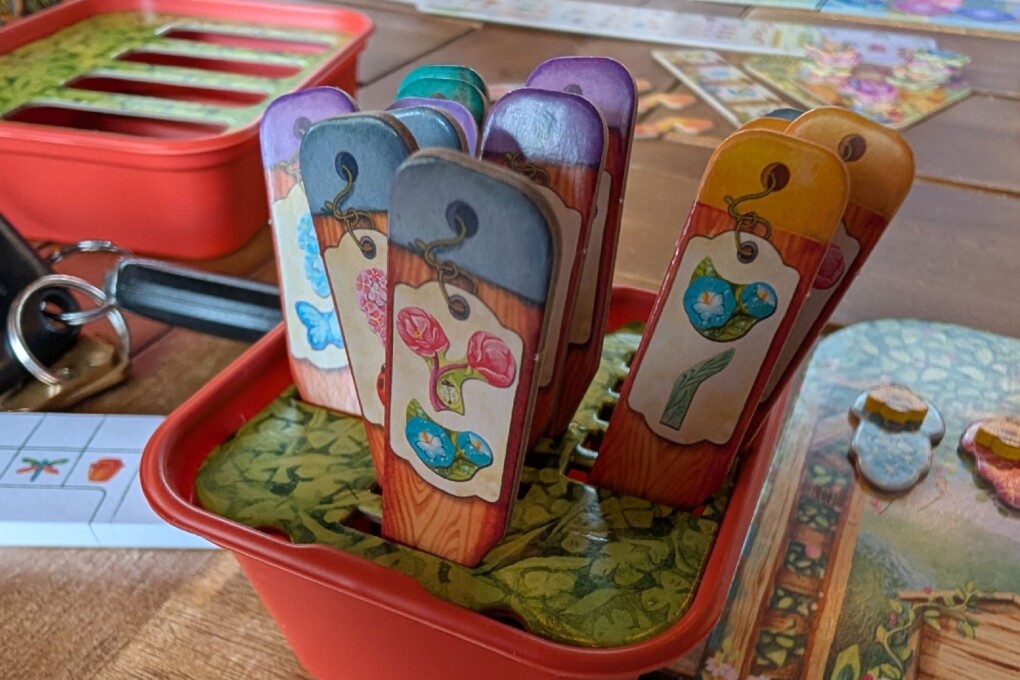
On your turn, you’ll primarily do three things. First, you’ll pick a tool from the four available, and whatever you select determines which components you’ll add to your garden. You might get a plant like hollyhock, which earns your points based on how many sets of the three different colors you get. Or maybe you’ll get a magnolia, which earns you points for how high its branching paths have grown.
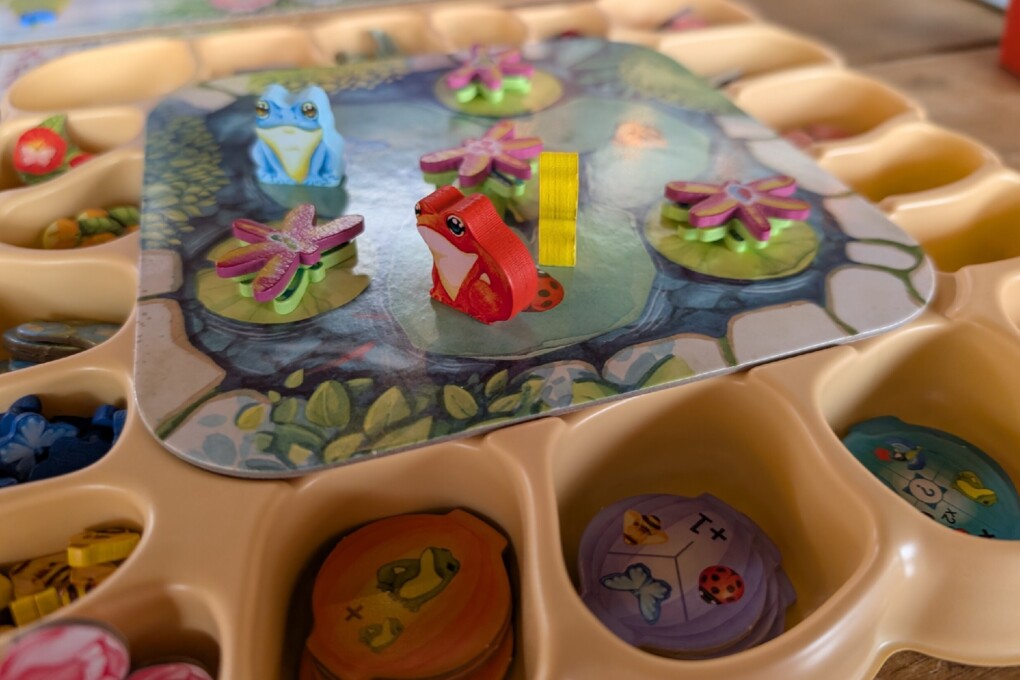
Your tool choice also determines what action you’ll take on your turn. Maybe you’ll be moving insects into or around your garden, earning points for their placement. You might also drip water down a scoring cascade, earning bonus items. Maybe you’ll hop your frog around a pond to collect insect bonuses. No matter which action you take, everything feeds back into how your garden scores.
The Right Tool for the Job
Over the course of 15 turns (which you keep track of by putting your used tools in your personal player pot), you slowly build out your personal garden board. The scoring choices that you make allow each player to take their own path, each with its own risks and rewards. Those risks are somewhat mitigated with some gaming mechanics – the moving of insects, for example. While this may take away some of the challenge, it does mesh well with the more laid back vibe, and early “mistakes” can usually be corrected if you so desire.
I also think that the limitations provided by the tools keeps you from getting a little too much analysis paralysis. There are only four choices, and if none of them are exactly what you wanted, it doesn’t take too much thinking to see what the best option could be. But there’s still enough decision-making in there about whether you value the item or the action more that your choices feel like they have meaning.
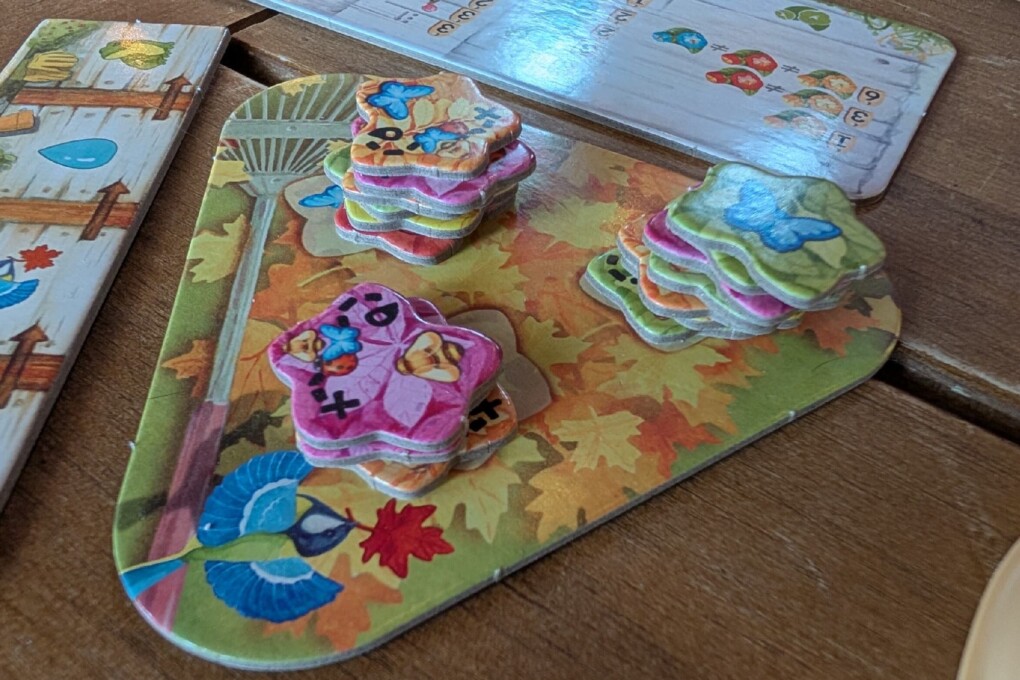
There’s also not much “engine building” here as you would generally describe it. The most planning you might do is figure out how to get three bees on your lavender. Well, that’s not going to take that much time; maybe you’ll need to think like 3 or 4 turns ahead. Instead of one big road map to get to your final destination for scoring, it’s mostly like little side trips.
I also want to talk, yet again, about the components. I greatly appreciate how everything has its place and fits together well. It’s the simple little things. The lavender flower fitting between two leaves. The designated spots for the bees. The benches where you place your honeypots. But there’s also the ability to move things around, so you almost get the feel of one of those reusable sticker books where you set up the room. I don’t know, it’s adorable and fun and I just like it, okay?
Final Thoughts
Overall, Pergola is a lovely game with amazing table presence. It’s certainly a beast to keep organized – my box arrived all discombobulated, and it literally took me 40 minutes to get everything rearranged. It wasn’t fun. It wasn’t something I want to do again. It was almost bad enough that I considered selling my copy just to buy a new, already-organized one.
But if you keep everything in order, this is a fun title. I believe the artwork makes it appealing to those who might not be as into gaming, and the simple but meaningful choices will leave them satisfied at the end. It’s one garden game that I think will stay in my collection for a while, even when that theme is no longer having its moment. Yeah, it will stay ‘planted’ right there in my collection. (silent chuckle because I think I’m hilarious)
You can find Pergola at your local game store or purchase a copy online from Amazon today.
Highs
- Incredible table presence
- Approachable, forgiving gameplay
- Choices are meaningful without being overwhelming
Lows
- If the little pieces get unorganized, you’ll be sad
- Maybe not enough depth for some gamers
Complexity

Time Commitment

Replayability