
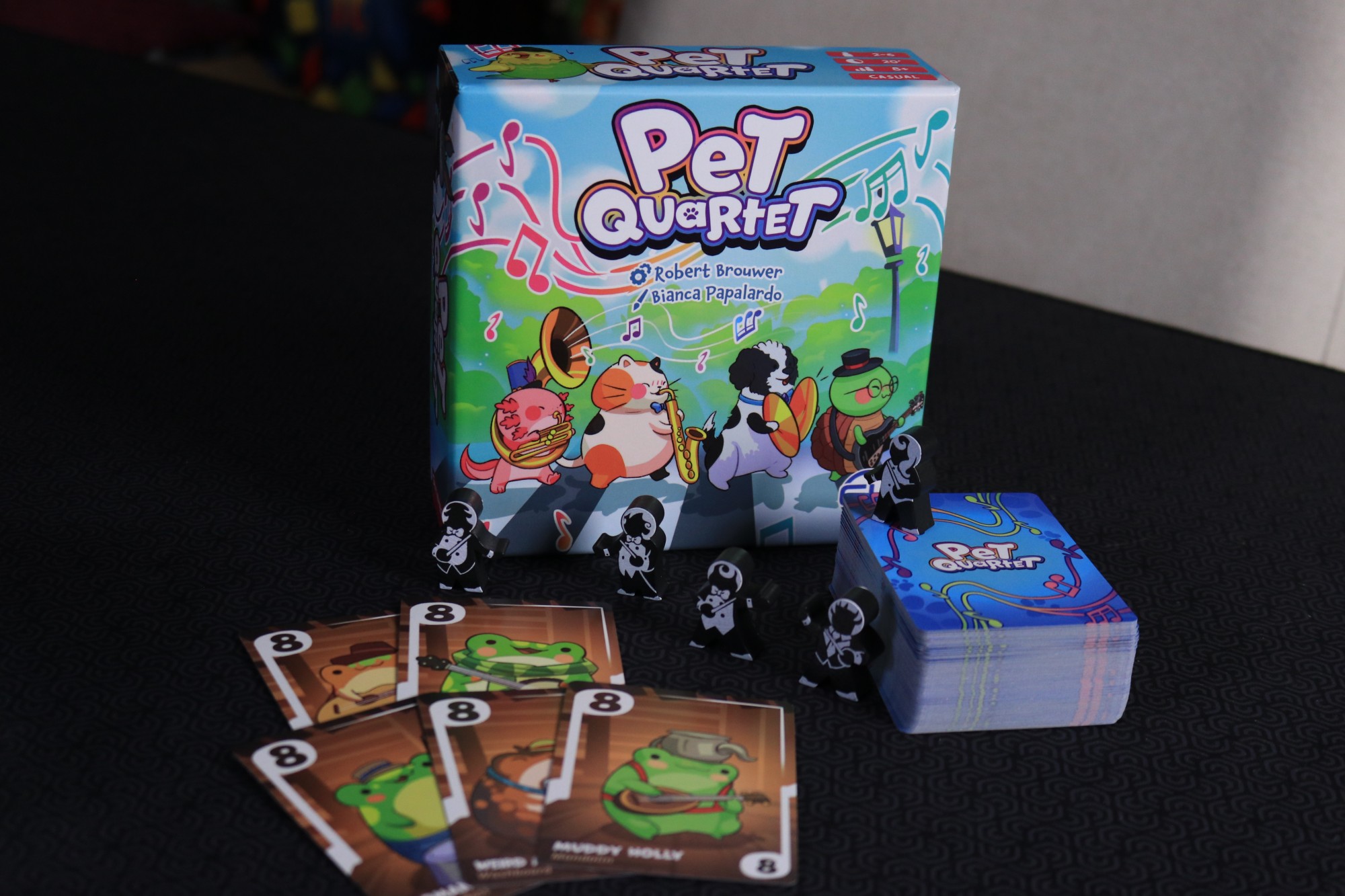

If you’ve ever wanted to start a band with incredibly cute animals with punny names, Pet Quartet is your kind of game. This game about classically trained pets that are trying to make it in the music business is designed by Robert Brouwer and published by GameHead.
Making the Band
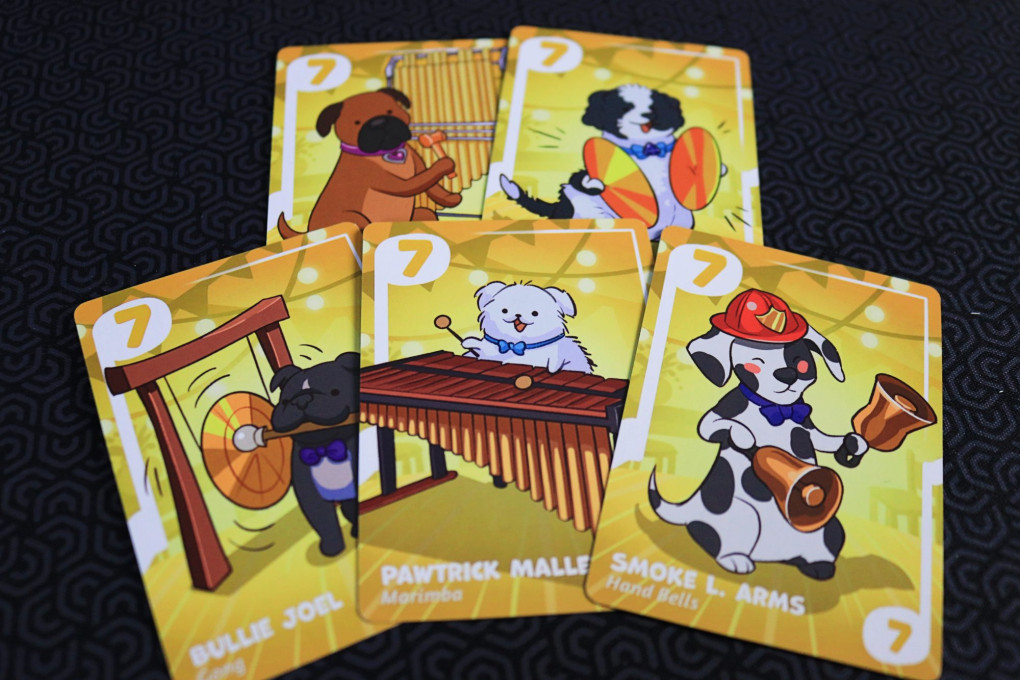
Like any good music producer, you’re looking for the cutest animals to turn into stars. Unfortunately, playing by those rules may just lose you the game. In Pet Quartet, you want to draft lines of musically talented animals throughout the game. Each animal has a number assigned to them that tells you how many of that card type is in the game. This number is helpful as you start recruiting talent.
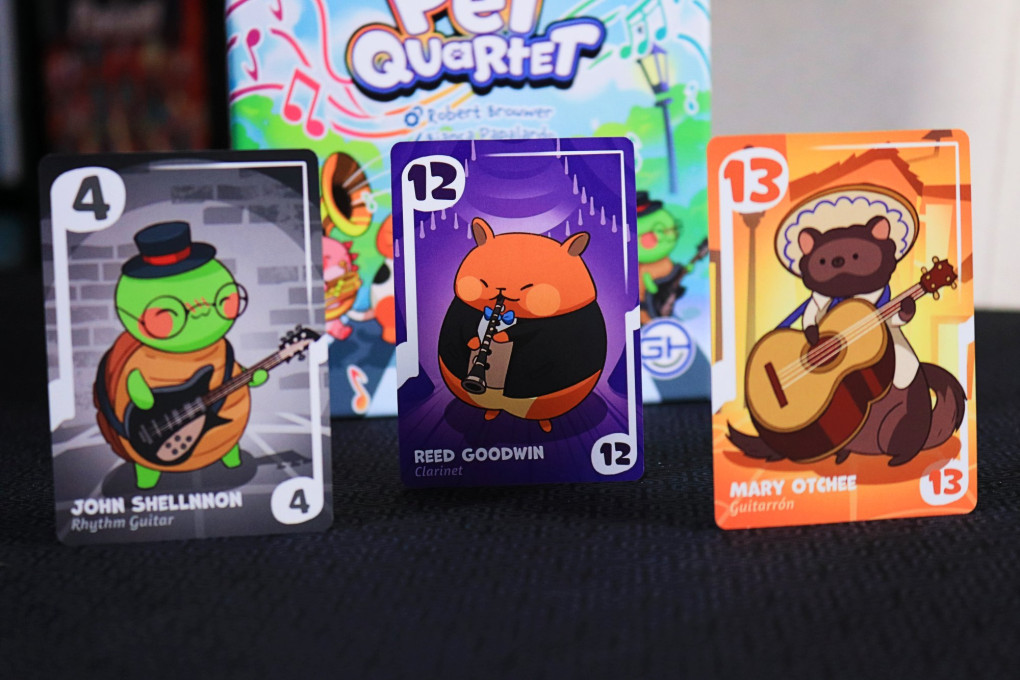
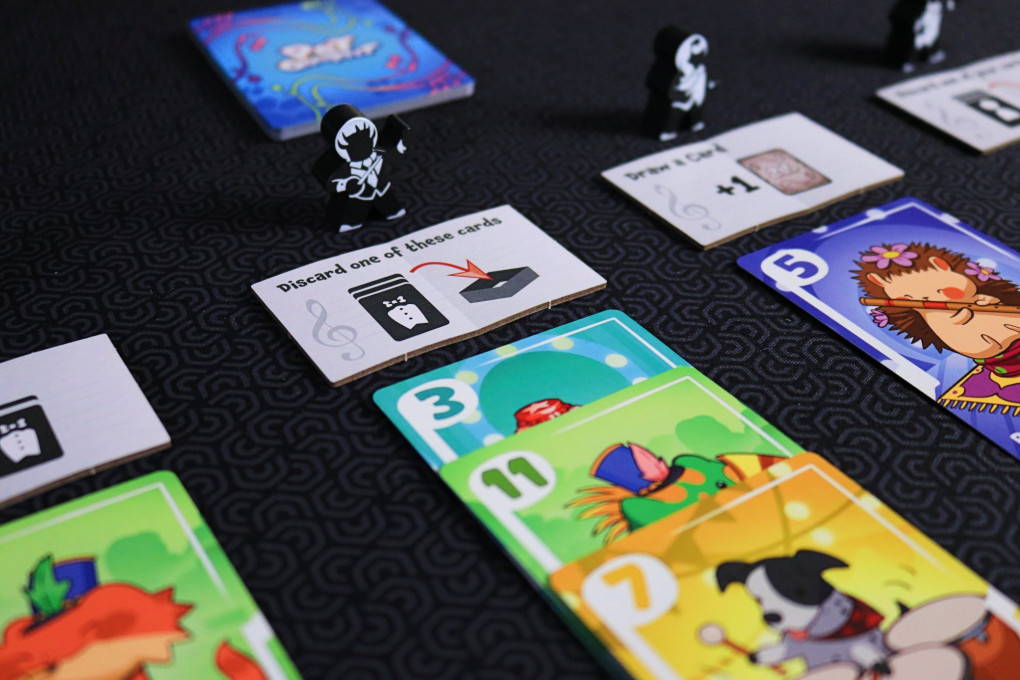
On your turn, draw a card, and place it in one of the lines under the conductor tokens in the center of the table. There is one conductor token for each player in the game. Players will take turns adding pets to the different lines in the center of the table. Each of these lines max out at four pets.
Instead of drawing a card on your turn, you can choose to draft one of the conductor lines that has one to four pets assigned to them. The pets that you draft will go into the tableau in front of you based on the different card types.
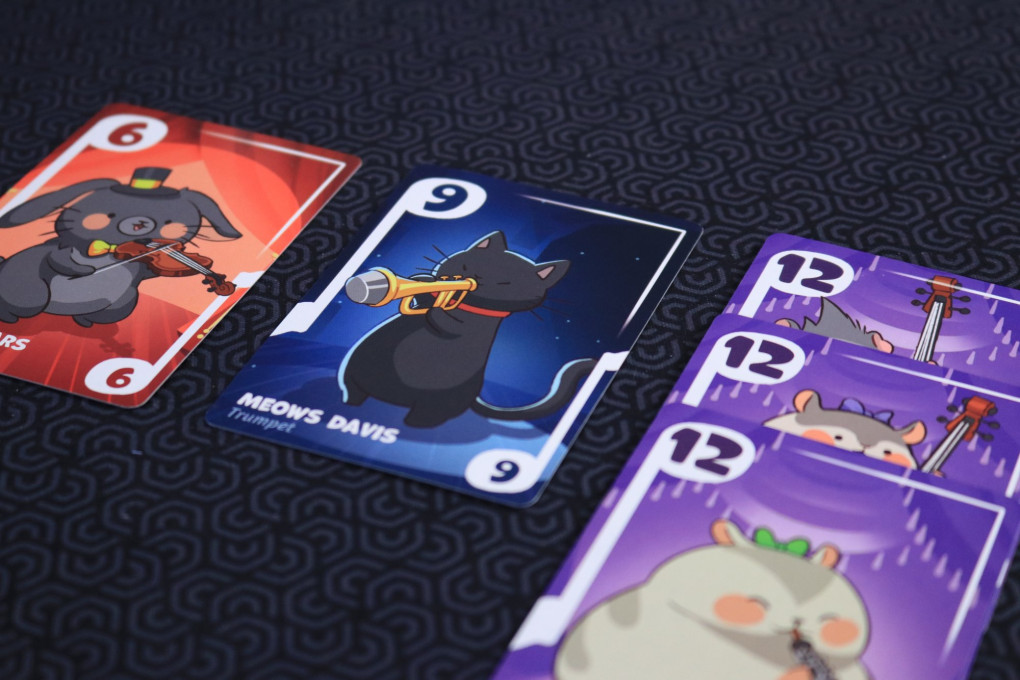
As you recruit these talented animals, keep in mind that you only score soloists and quartets in this game. The music industry has gotten sick of duets and trios and these sets are frowned upon. It’s easy to collect a soloist that has the number three or four on their card. But you have to watch out because the other players are going to try and stick you with cards that you don’t want.
The Perfect Note
One of my favorite card games of all time is a game called Coloretto. This is a game about collecting different colored chameleons, gaining points based on your largest three sets and losing points for color sets outside your top three.
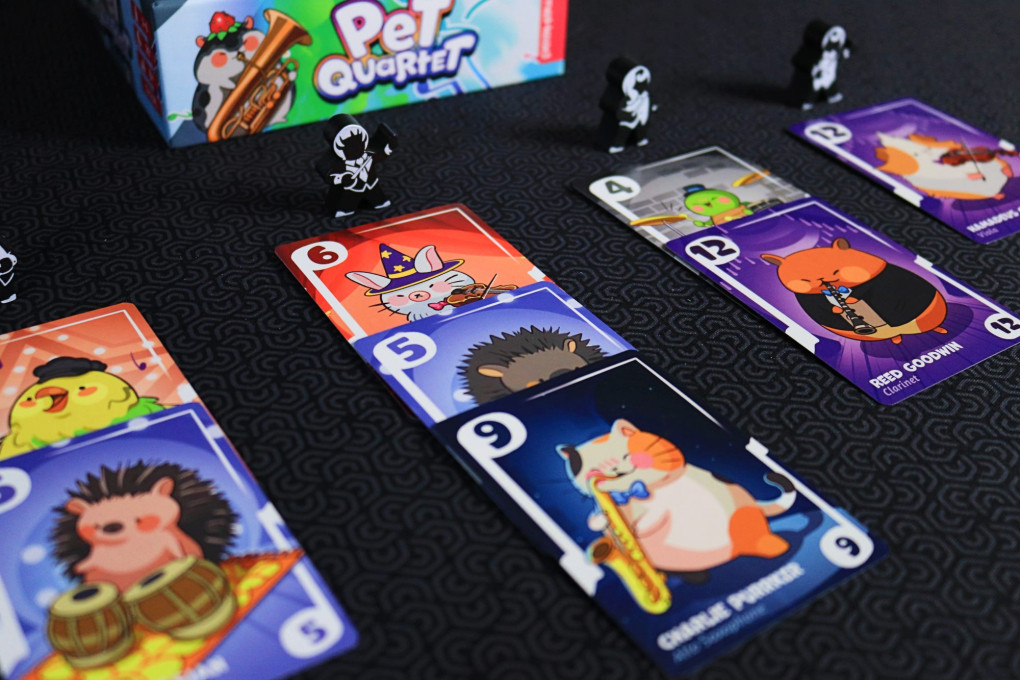
Pet Quartet feels a lot like the sibling to Coloretto. This game has the same basic loop of deciding to draw a card, adding it to one of the lines OR grabbing cards to exit the round. Opponents are always looking to complicate what could have been an easy decision. Since all the cards you collect are kept face up and visible to all the other players, keeping an eye on your opponents collections is key.
In the late game, decisions become more difficult as you weigh the options of busting a quartet or taking a chance when adding new cards to one of your soloists. The makeup of the deck makes it so that gaining a soloist with a low card number is easy but doing the same with a high numbered animal will be a challenge. At the end of the game, all soloists and quartets are worth one point. Sets of pets of any other quantity are worth zero points.
End game ties are broken by the player with the lowest value quartet and then with the highest value soloist.
Advanced Music Theory
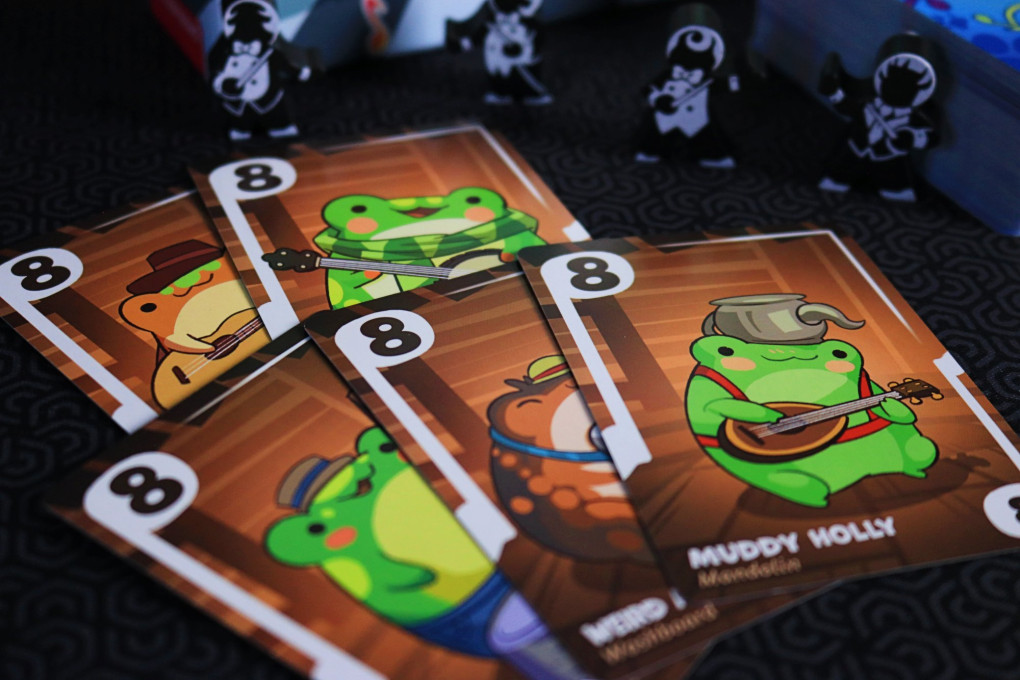
Pet Quartet is drenched in cuteness. The illustrations of each animal from Bianca Papalardo is fantastic. The shear number of punny names on these cards gets us every time we play the game. The game is obviously geared toward families but can be enjoyed by anyone with a sense of humor.
The game comes with optional Maestro Tiles and Duet Tiles (for two players). These tiles go below the conductor tokens and give specific rules that apply just to that line of animals. I love the layer of strategy that these tiles give to the game. The Maestro Tiles can actual help players who have ruined their tableau of pets. Some rules limit a conductor line to only two cards, pass a card that you just took, discard a previously collected card and more. For most gamers, this is the way you’ll want to play Pet Quartet.
Pet Quartet is a really satisfying drafting game that has a charming style. My only issue with the game is how unsatisfying the final scoring is. In a four player game, it’s pretty common to have scores of four to six points. These scores feel like a close soccer game where the final score is one to zero after ninety minutes.
Thankfully, there is an optional scoring criteria where soloists score their card value and all quartets score four points. This ups the ante for players who are trying to score big with a soloist with a high card number. We’ve played with this scoring variant multiple times and it’s far more satisfying. Even with the alternative scoring, some issues creep into the game.
A player can immediately exit a round, taking a conductor with a single animal. Unfortunately, a player can do this over and over, collecting nothing but soloists and not participating in the meat of the game. Because there are no negative points awarded like in Coloretto, there’s no real penalty. I think this is my biggest gripe with a game.
Final Thoughts
Pet Quartet has hooked me in a way that I didn’t think it would. I honestly had no desire to play or review this game because it looked a little “too cute”. A single play of the game changed my tune pretty quickly. The game plays well at six players and there are lots of opportunities for underhanded decisions that can mess with another players tableau.
GameHead did an excellent job with making this game both accessible for younger gamers while giving the option for more strategic play with the Maestro Tiles and advanced scoring. I lost my copy of Colloretto about four months ago. Pet Quartet may be the reason why I choose not to replace it.
Pet Quartet can be pre-ordered from the GameHead webstore and will ship in September 2026.
This game was provided to us by the publisher for review. Read more about our review policies at One Board Family.
Highs
- The addition of Maestro cards add more twists and strategy to the game
- Fun artwork and a cute style that is super inviting
- Scales well from two to six players
- Easy to teach newer gamers
Lows
- Basic scoring is very unsatisfying
- A player can unfortunately spam soloists without penalty
Complexity

Time Commitment

Replayability