
There’s a certain comfort I get from print-and-play games that know exactly what lane they’re in. No insane setup. No giant rulebook. Just a clean sheet of paper (or iPad file, in my case), a handful of dice, and the ability to do something fun for 15–20 minutes.
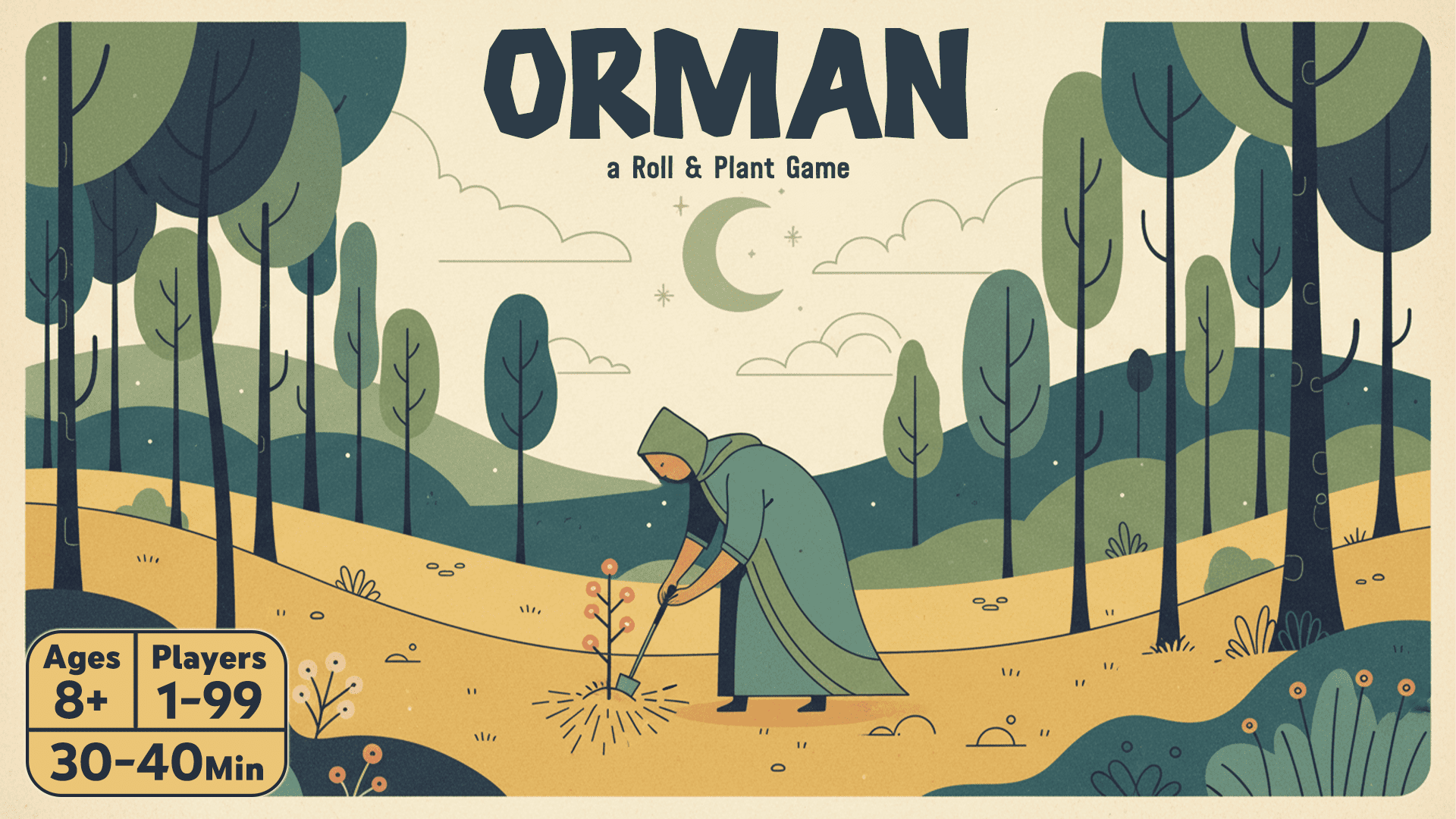
ORMAN definitely meets that qualification of print-and-play roll-and-write comfort food. Yes, very specific, I know.
One Tree at a Time
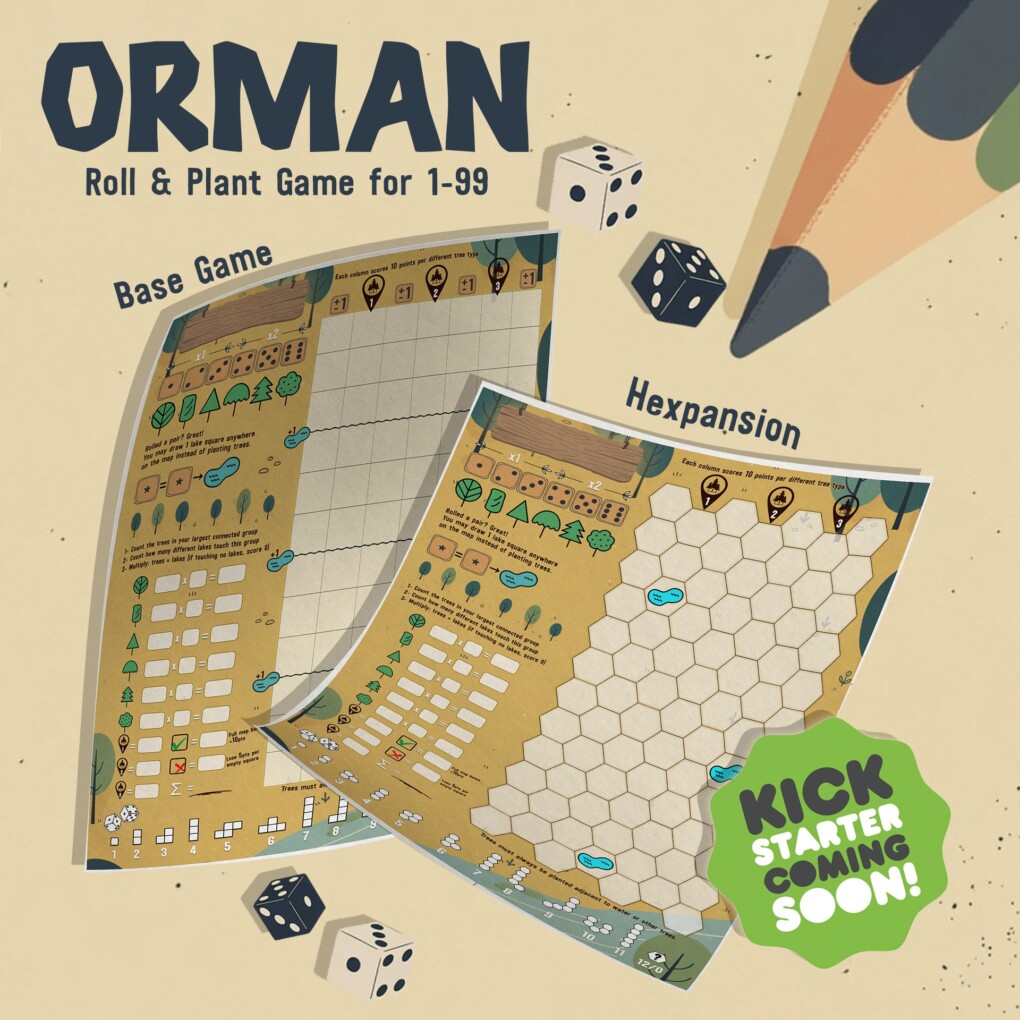
At its core, ORMAN is a roll-and-draw game about building a forest. You’re placing trees onto a personal map, usually trying to form clusters as the grid fills in. Each round revolves around four dice. Two determine the shape of your placement, and two determine what trees you’re placing and how many.
The shape selection uses a familiar but effective system: you can take either die, their sum, or their difference. It’s a simple mechanic that minimizes the impact of bad dice rolls so that even bad throws usually leave you with something you can use, even if it’s not exactly what you want.

The remaining dice handle tree type and quantity, and this is where ORMAN quietly nudges you toward interesting tension. Rolling high means you get to place more trees per square, which is tempting — more trees usually means more points. But the game also rewards variety, giving you bonus points when different tree types populate certain columns. That push and pull keeps the experience engaging without ever feeling punishing.
Oh, and there are lakes. If you roll doubles with your tree placement dice, you can put a lake anywhere on your board. These are important for placement – any new trees placed have to be connected to a lake or to a group of trees that already exists. More importantly, they have a big impact on your points…
Just Add Water
You’re primarily rewarded for building large, orthogonally connected groups of trees. The number of trees drawn in your biggest group is multiplied by the number of lakes that group borders. It’s straightforward, but it encourages careful placement of both trees and lakes. You could have a HUGE forest of trees, but without any lakes nearby, you’ve got nothing.

I only played ORMAN solo, and it works nicely in that mode. There’s a clear personal challenge in trying to optimize your layout and push for a higher score, especially as space becomes tighter. In multiplayer, interaction appears to be minimal, with most of the tension coming at the end of the game. I could see players intentionally working to fill up their forest to force others to take penalties for unfinished grids. It’s subtle, but it’s there.
Final Thoughts
What stood out most to me is how approachable ORMAN feels. This would be an excellent entry point for someone new to roll-and-draw or print-and-play games. The decisions are meaningful but not overwhelming, and the rules stay out of the way once you understand the flow. Players with more experience in the genre will likely enjoy their first few plays, but may eventually find themselves wanting something meatier — more chaining, more layered scoring, more long-term planning.

And that’s okay. ORMAN doesn’t feel like it’s trying to compete with the heavier hitters like Hadrian’s Wall. Instead, it presents a calm, clean experience that’s easy to teach, easy to play, and easy to recommend for most gamers.
ORMAN: A Roll and Plant Game is on Kickstarter through February 28, 2026. Check out the campaign today.
A prototype of the game was provided for this coverage. Components and rules covered in this preview are not finalized. Read more about our preview policies at One Board Family.